Dive into the creative process with Kentmere 100 film using the Nikon FM camera and explore tips for capturing stunning shots in urban settings.
The beauty of film photography is timeless, and Kentmere 100 stands out as a superb choice for enthusiasts and professionals alike. It's versatile, offering exceptional quality and ease of use, making it a favorite among film photographers. In this article, I’ll share my experience shooting with Kentmere 100 using the classic Nikon FM camera.
Camera Overview
As a Nikon devotee, I've built a substantial collection, including several models like the F, F2, F3, F4, F90x, F100, and the FM series. Despite a couple of older FM bodies exiting my collection due to issues, I was thrilled to find a pair of well-functioning FM cameras to replace them—one in classic chrome and another in matte black. After re-sealing the black one, these cameras are now ready for action, so I decided to take them out for a spin with Kentmere 100 film.
The Gear
For this outing, my setup consisted of the Nikon FM paired with a Nikkor Ai Converted SC 50mm f/1.4 lens. This combination offers great flexibility, particularly in low light and creative depth of field control. The 50mm lens is often referred to as the “standard” lens for its field of view closely resembling the human eye, making it an excellent choice for a variety of scenes.
Film and Development
Kentmere 100 boasts a fine grain and excellent sharpness, which is crucial when capturing detail in urban environments. I developed the film using Ilfotec HC at a dilution of 1+31. This development process is known for enhancing the film's contrast and tonal depth, two essential elements when shooting street scenes.
Shooting Techniques
When shooting with Kentmere 100, the key is understanding how to work with the film’s characteristics and your camera settings. Here are some vital steps I've found beneficial:
- Meter Your Scene: Always start with proper exposure. The Nikon FM's built-in light meter can help you achieve correct settings. For daylight situations, you'll often find an aperture of f/8 to f/11 a good starting point.
- Use a Steady Hand: Given the slower ISO of 100, ensure your shutter speed doesn't drop too low to avoid motion blur. Aim for a minimum of 1/100s when using the 50mm lens to keep your shots sharp.
- Utilize Natural Light: Kentmere 100 performs exceptionally well under natural light conditions. When shooting in the urban landscape, leverage the golden hours—early morning or late afternoon—for soft, diffused light.
- Pay Attention to Composition: Urban photography offers dynamic compositions with lines, textures, and movement. Use leading lines and symmetry to draw the viewer's eye through the frame.
Captured Moments
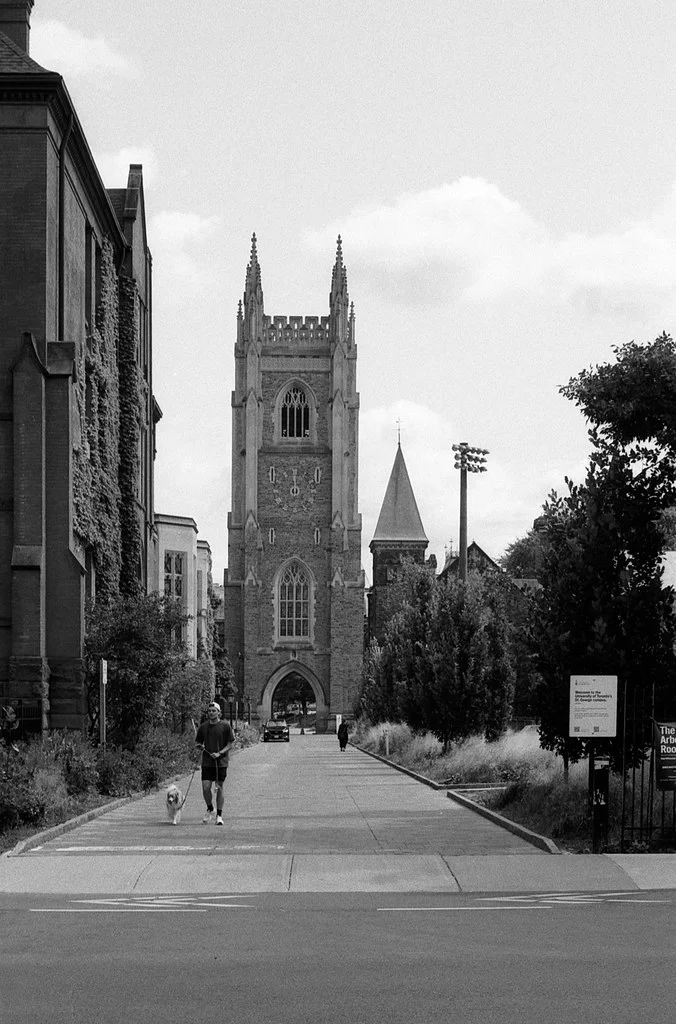
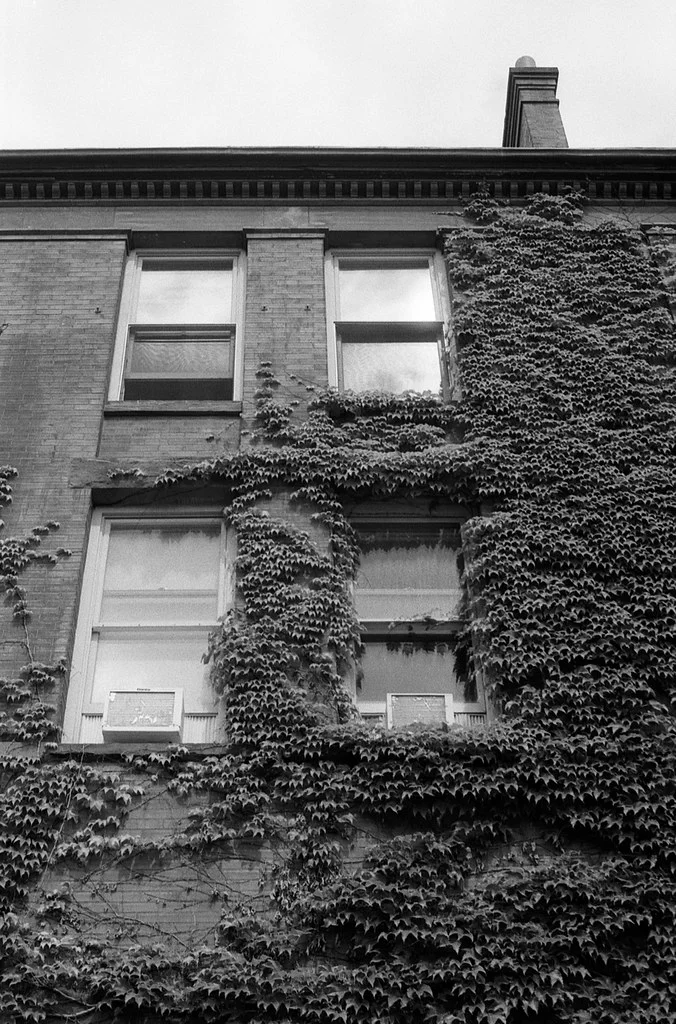
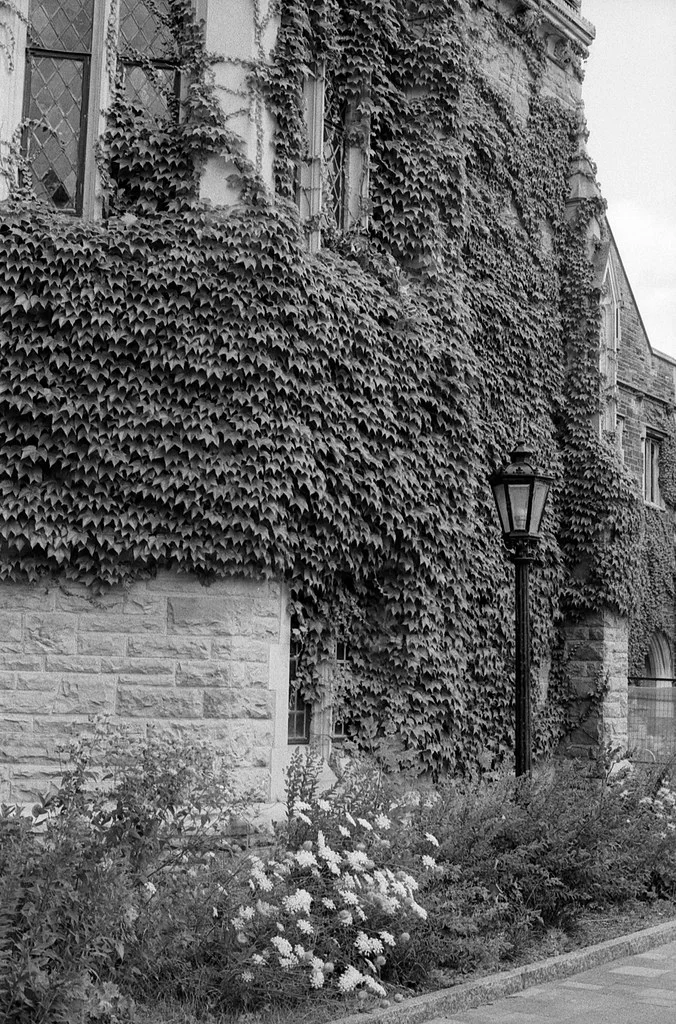
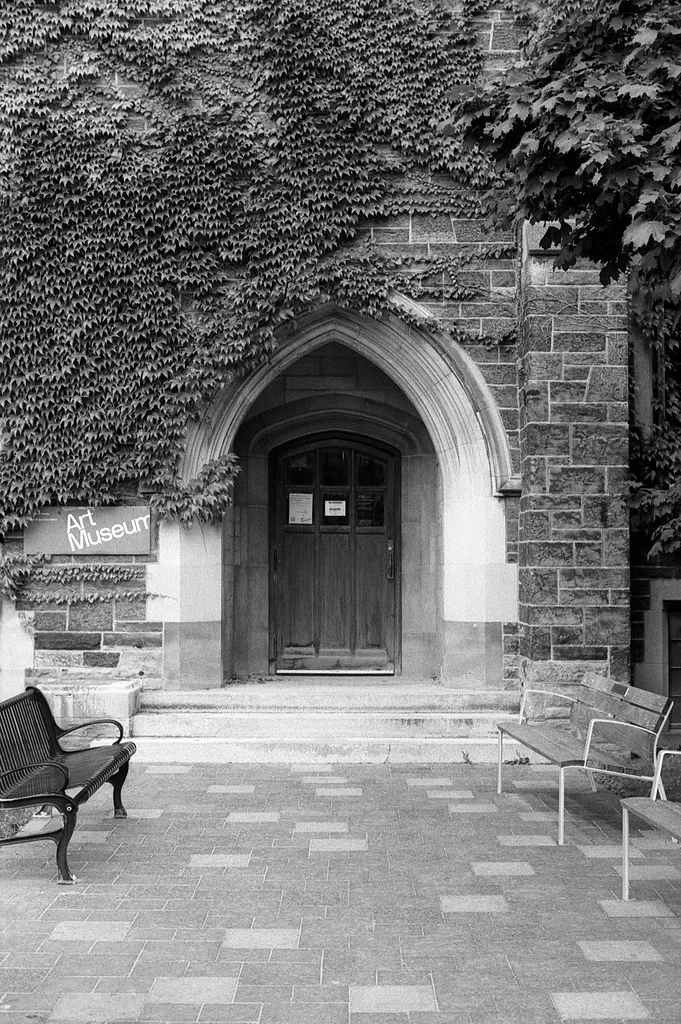
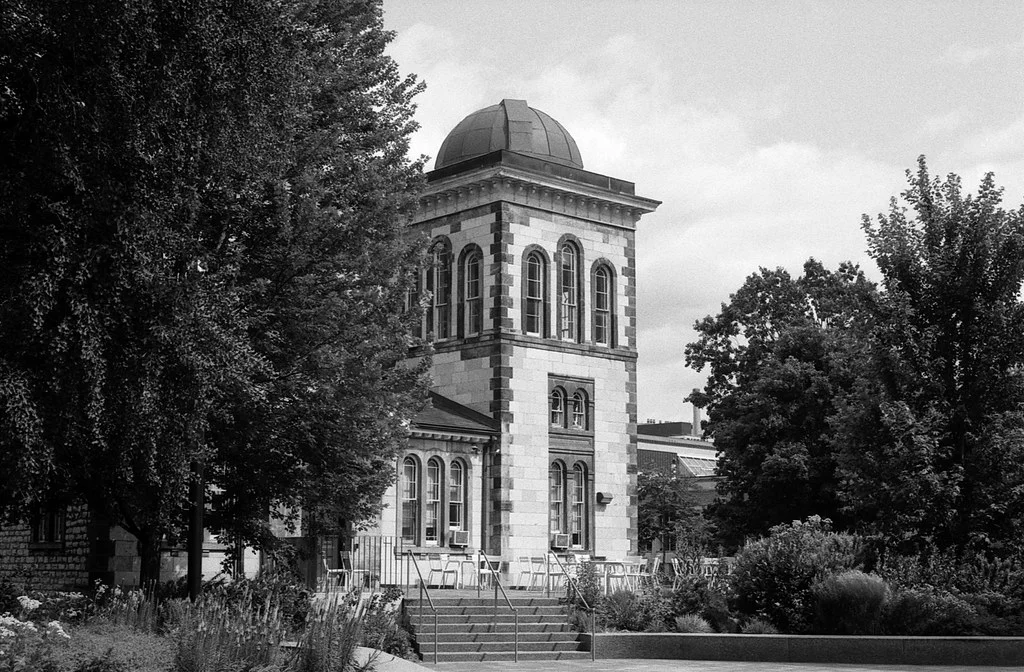
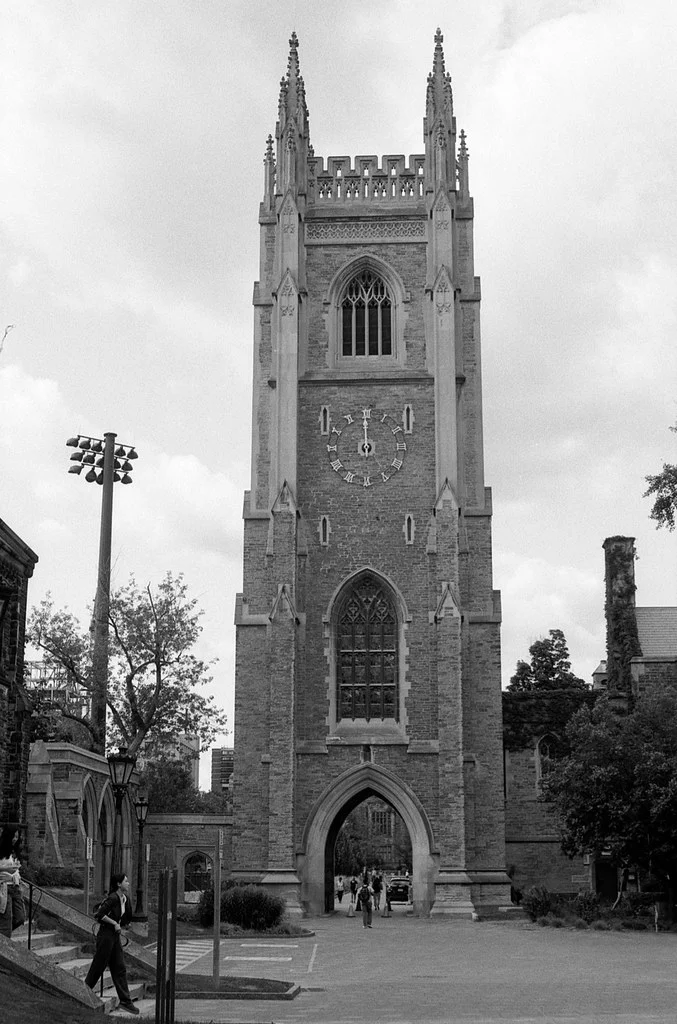
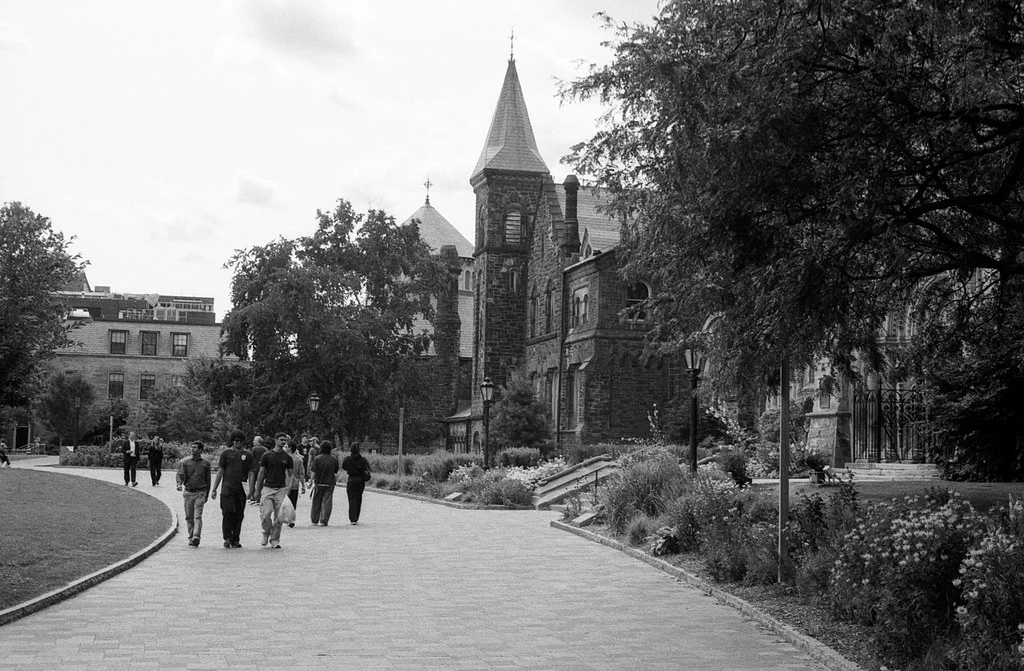
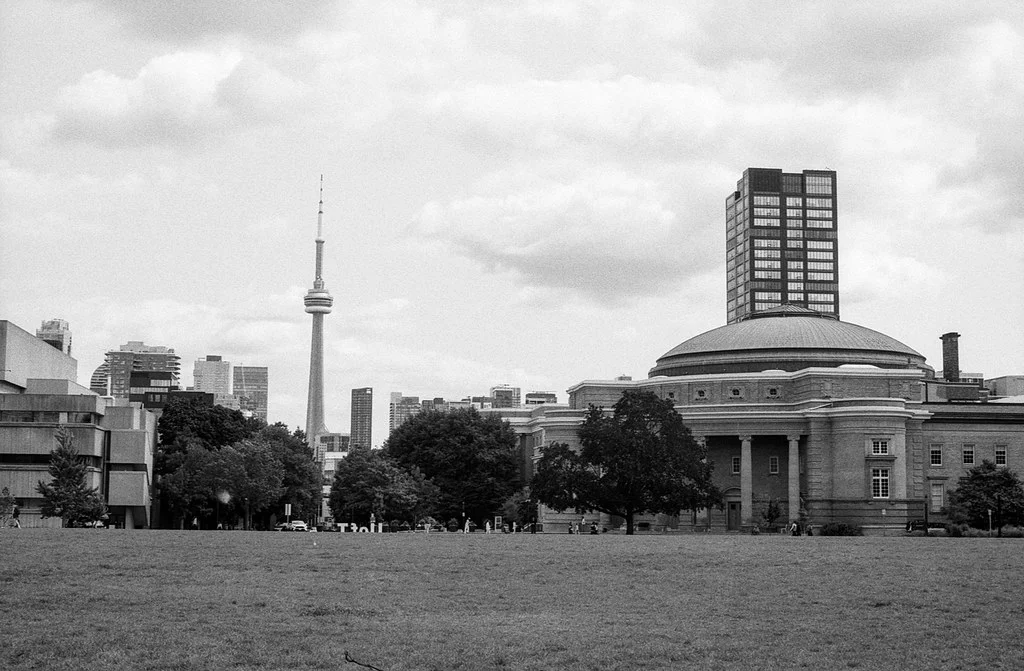
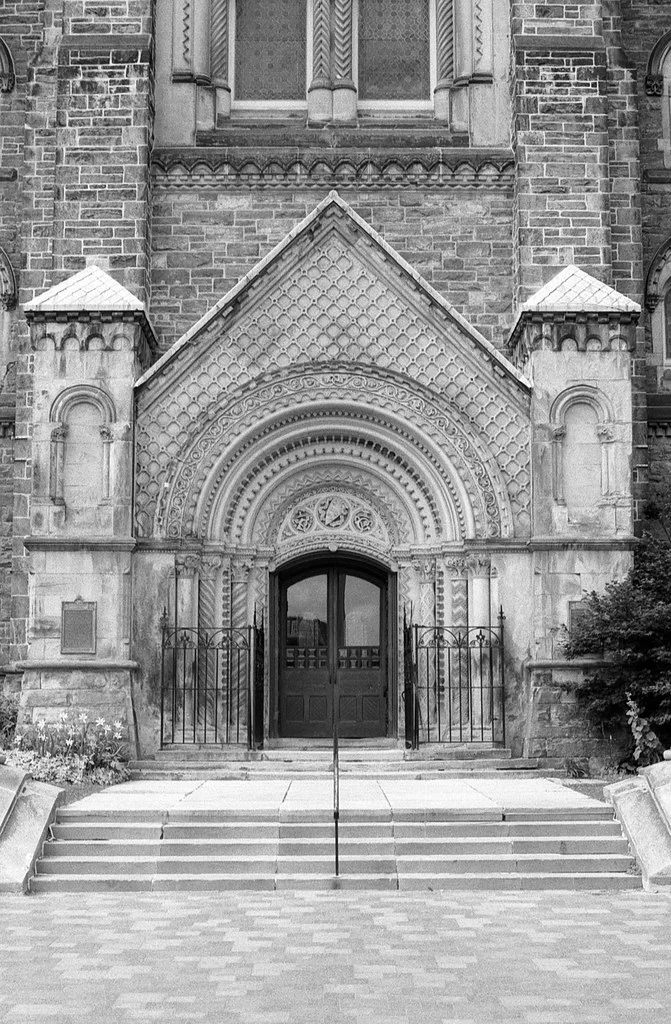
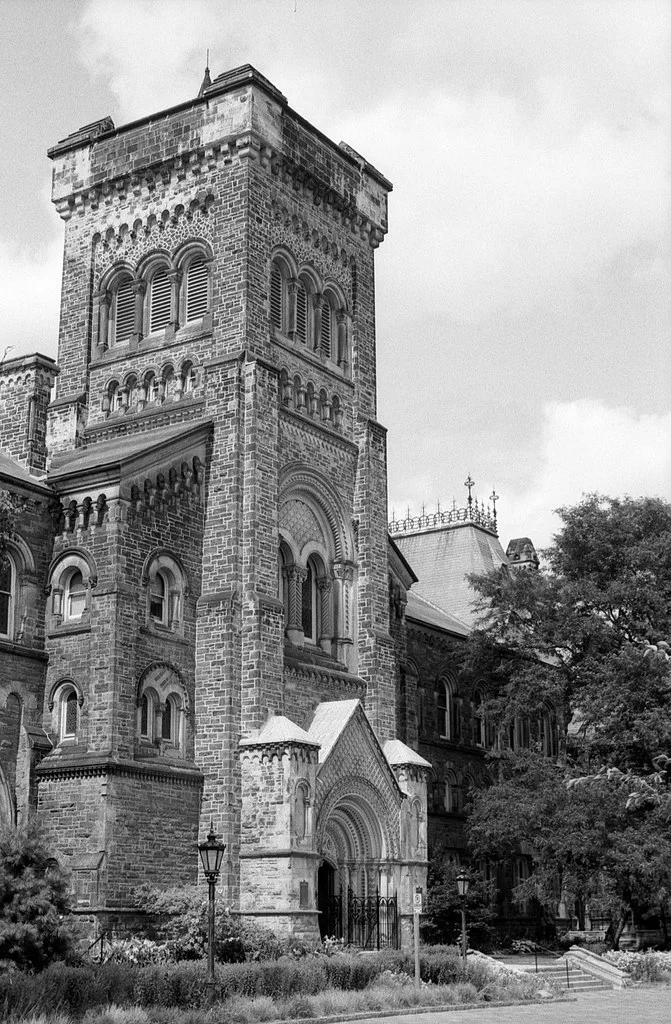
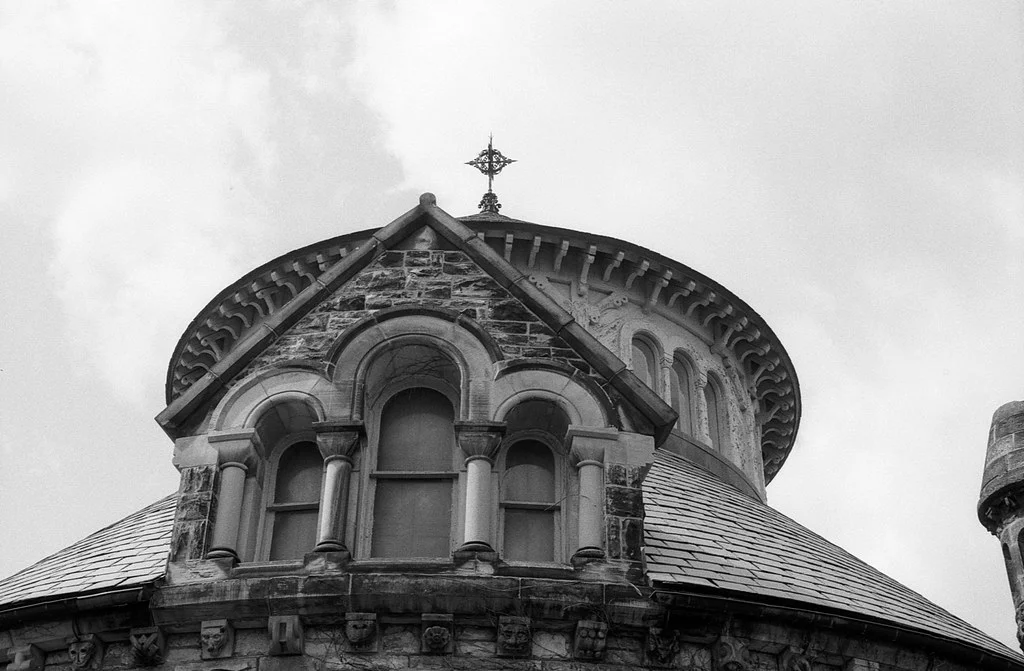
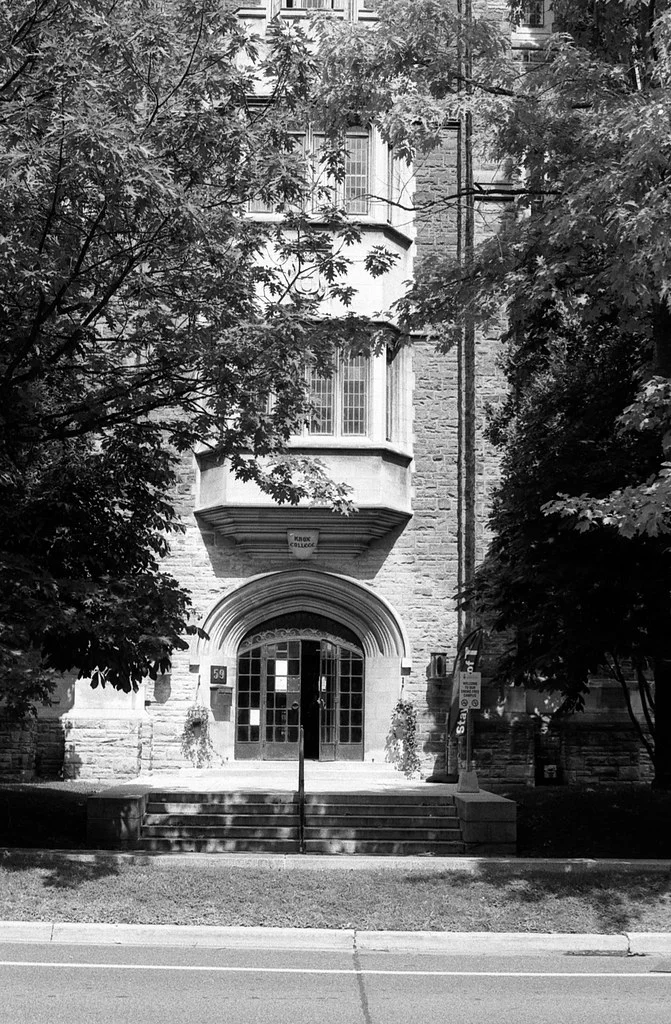
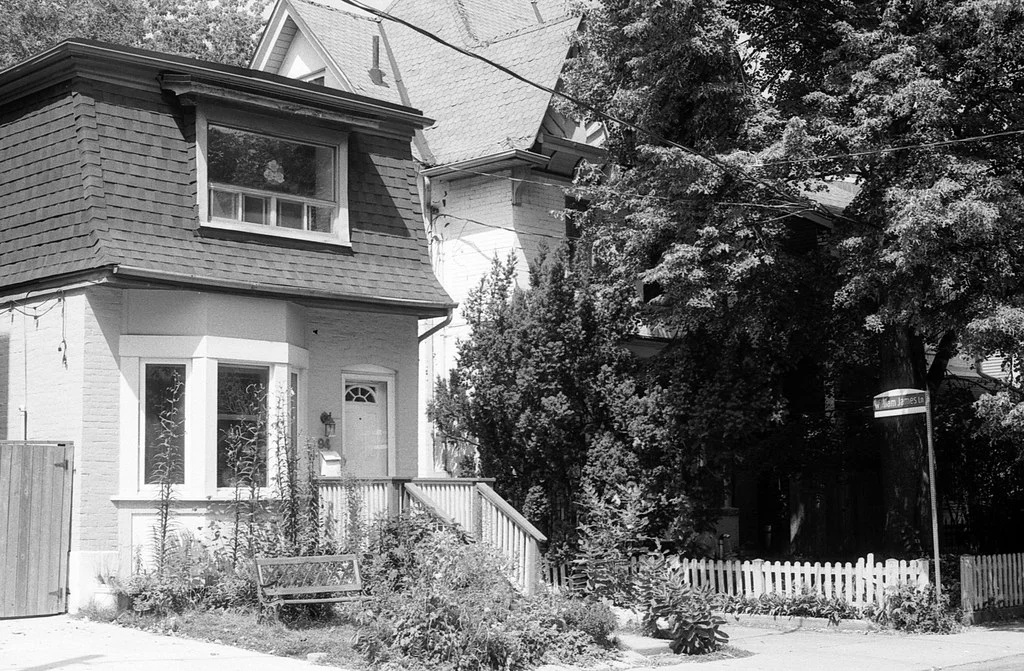
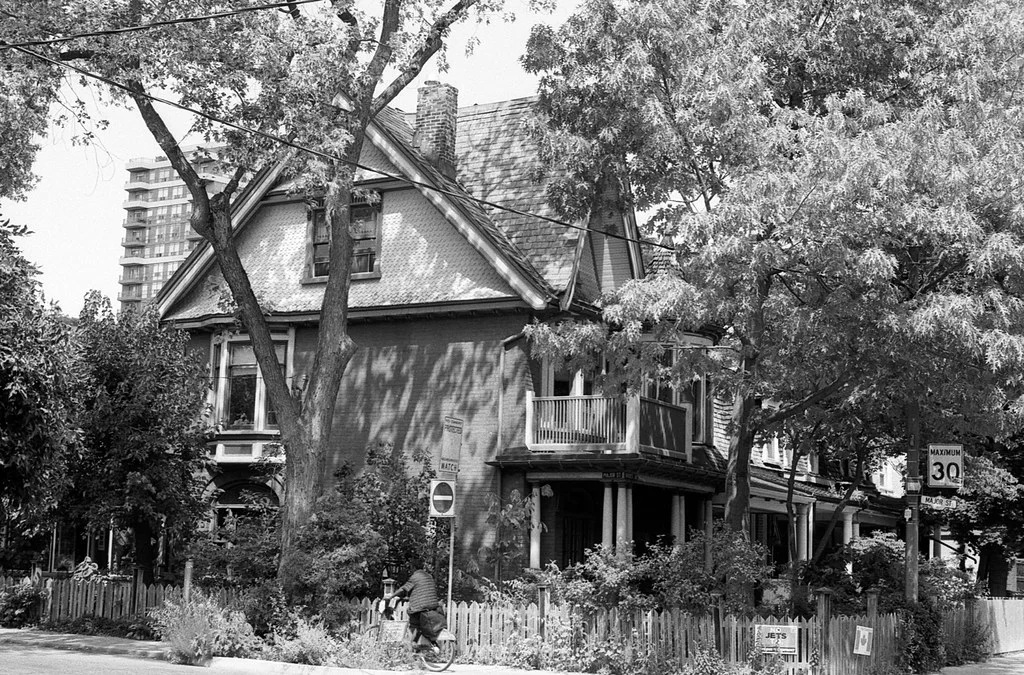
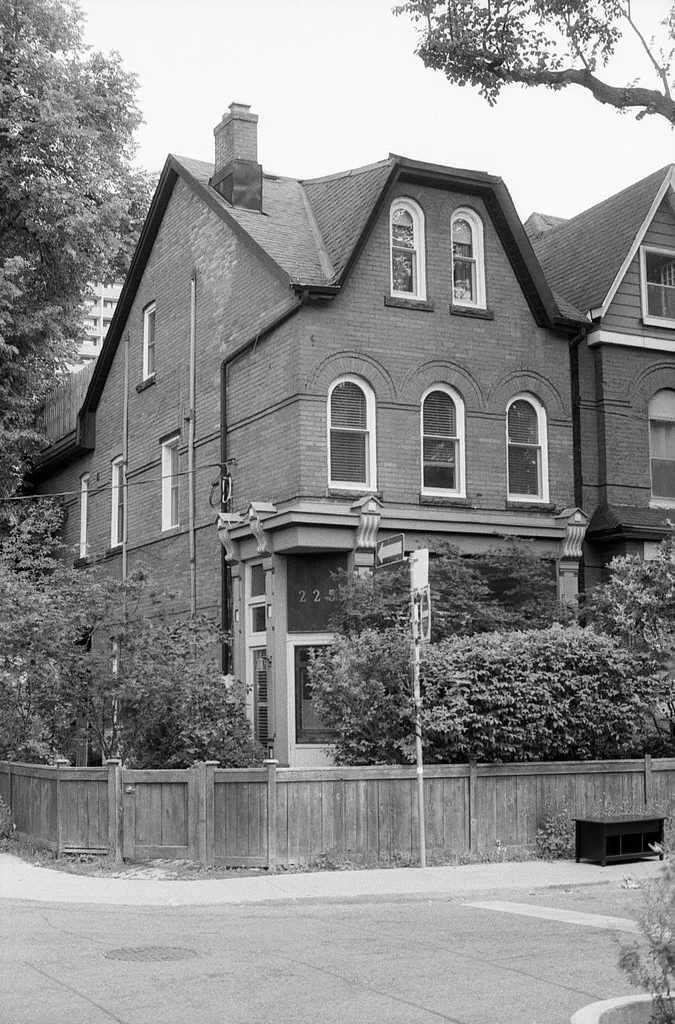
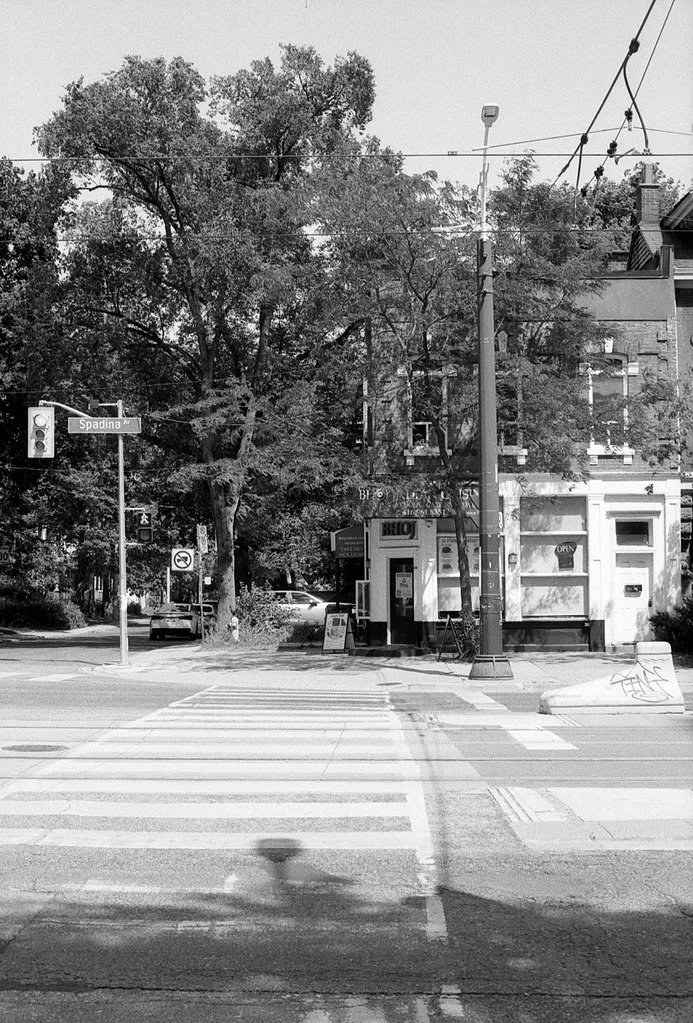
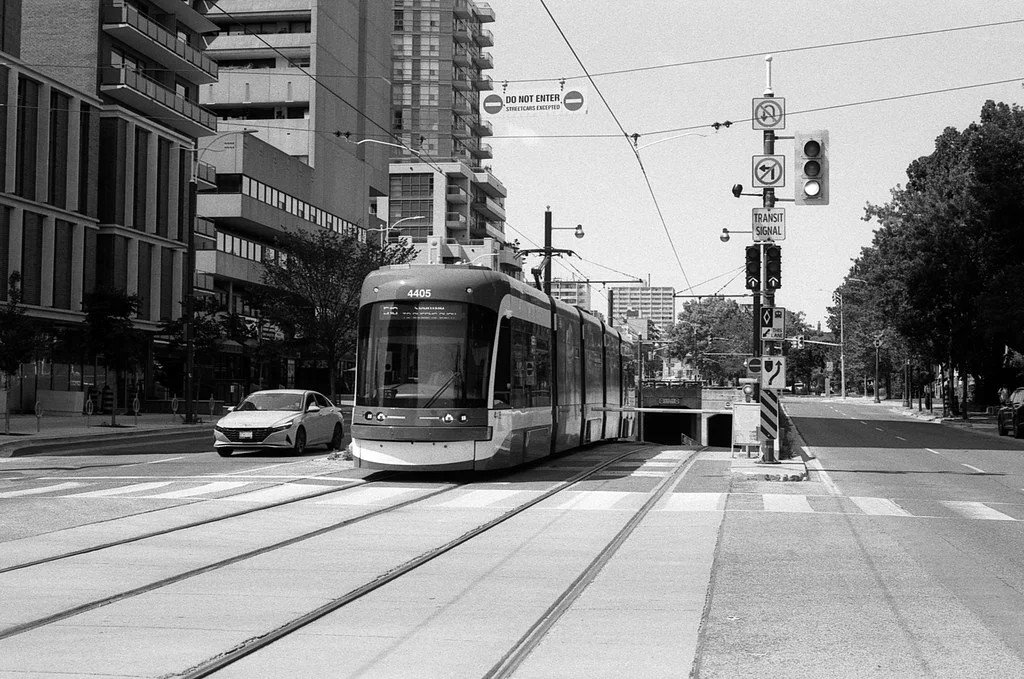
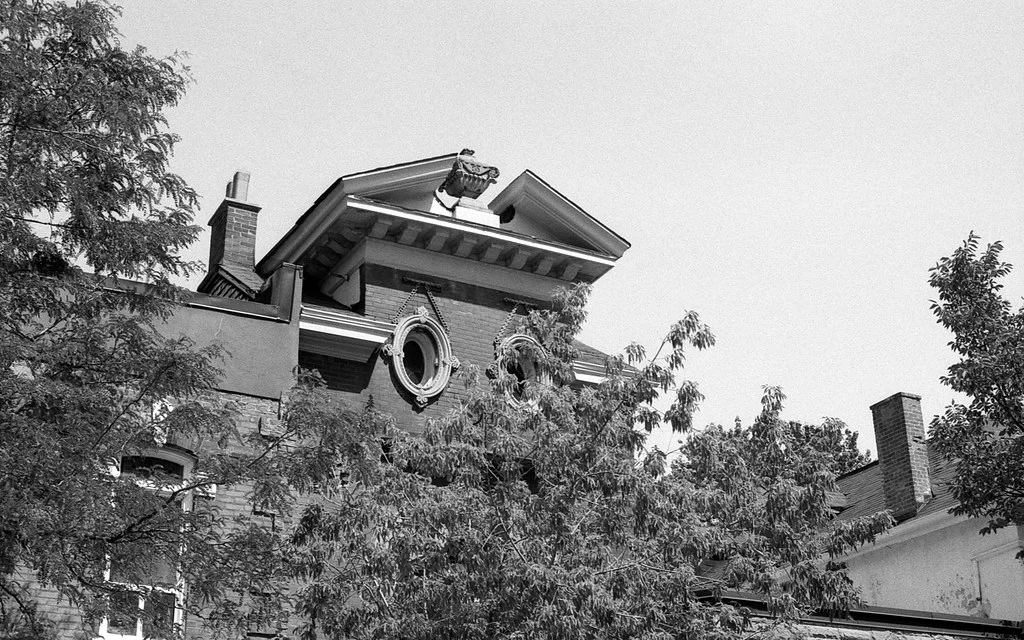
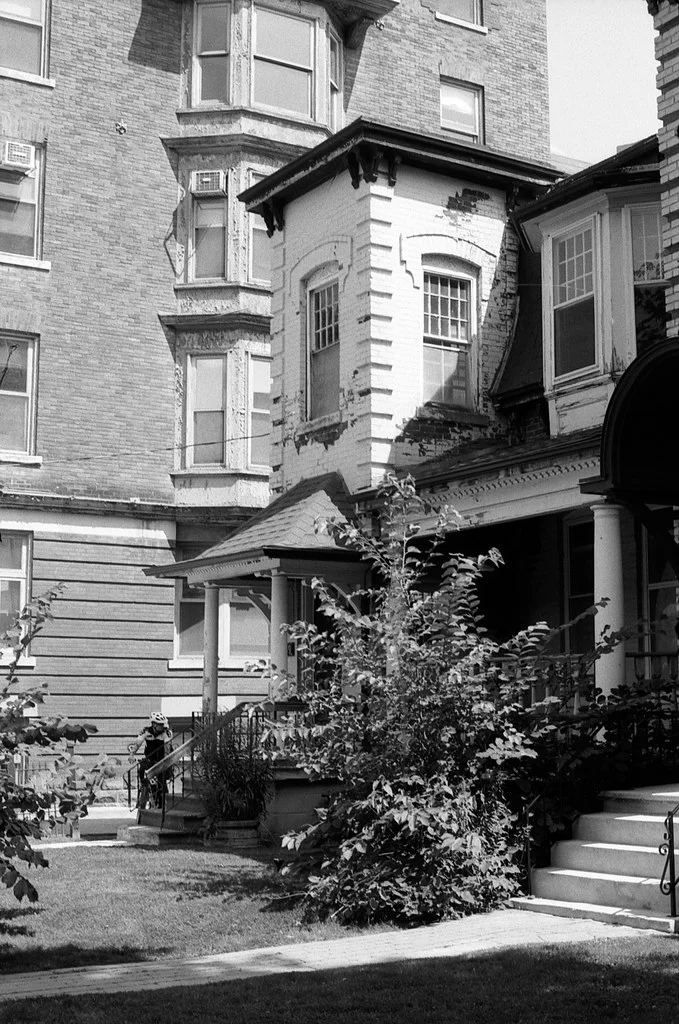
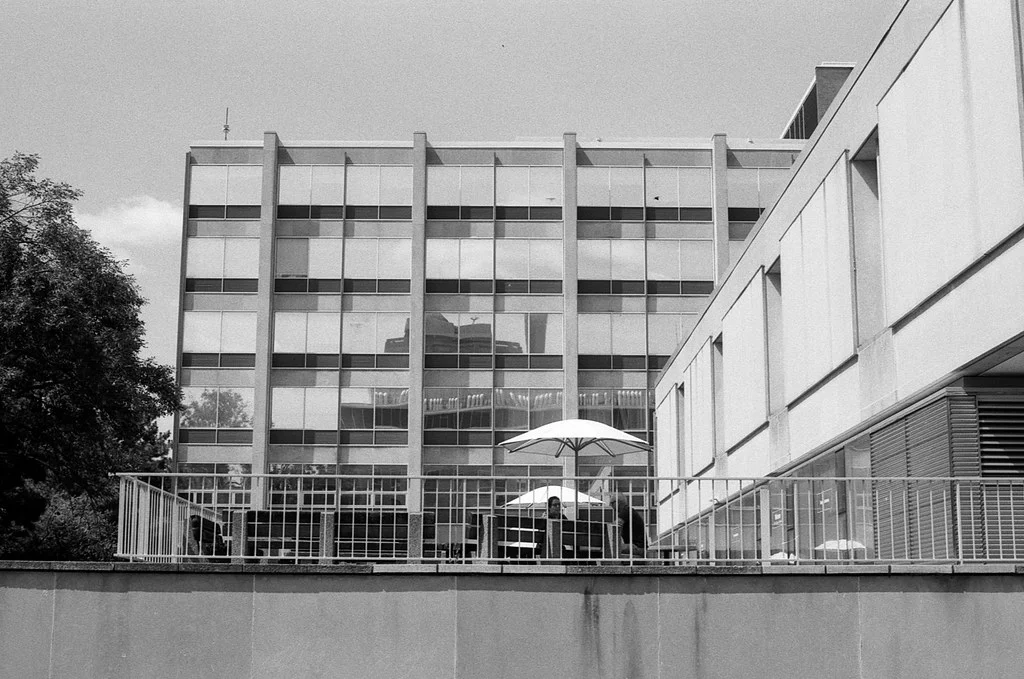
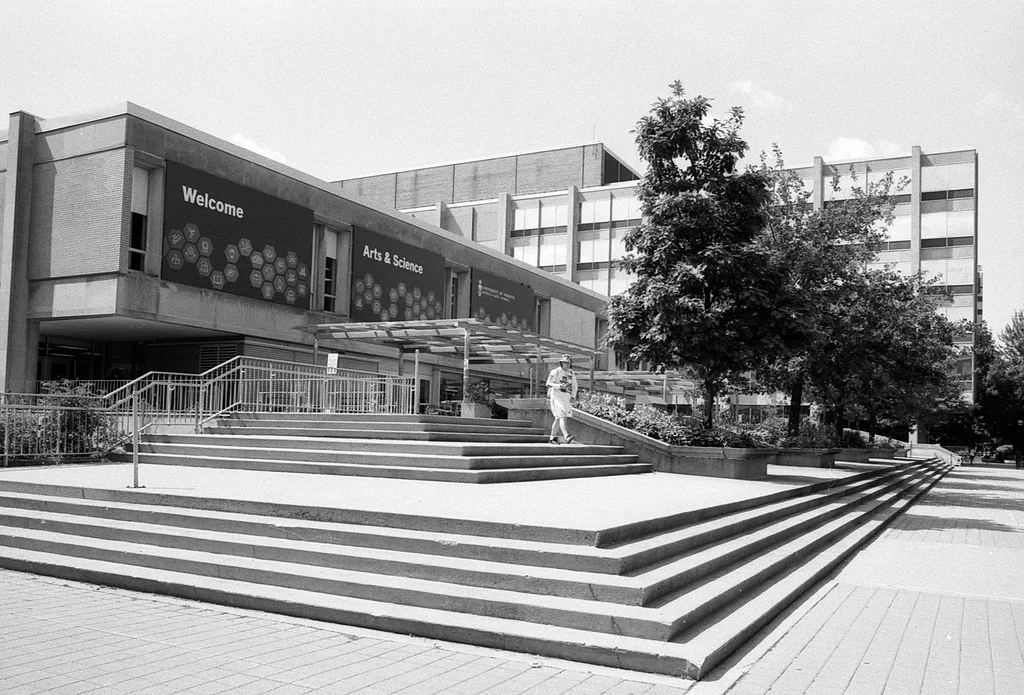
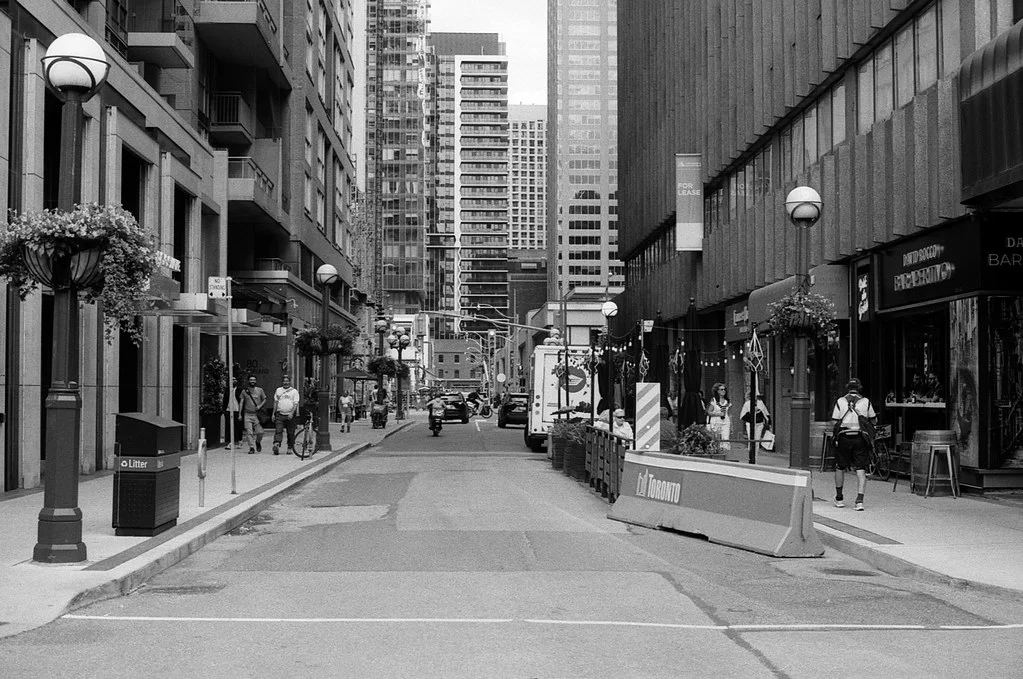
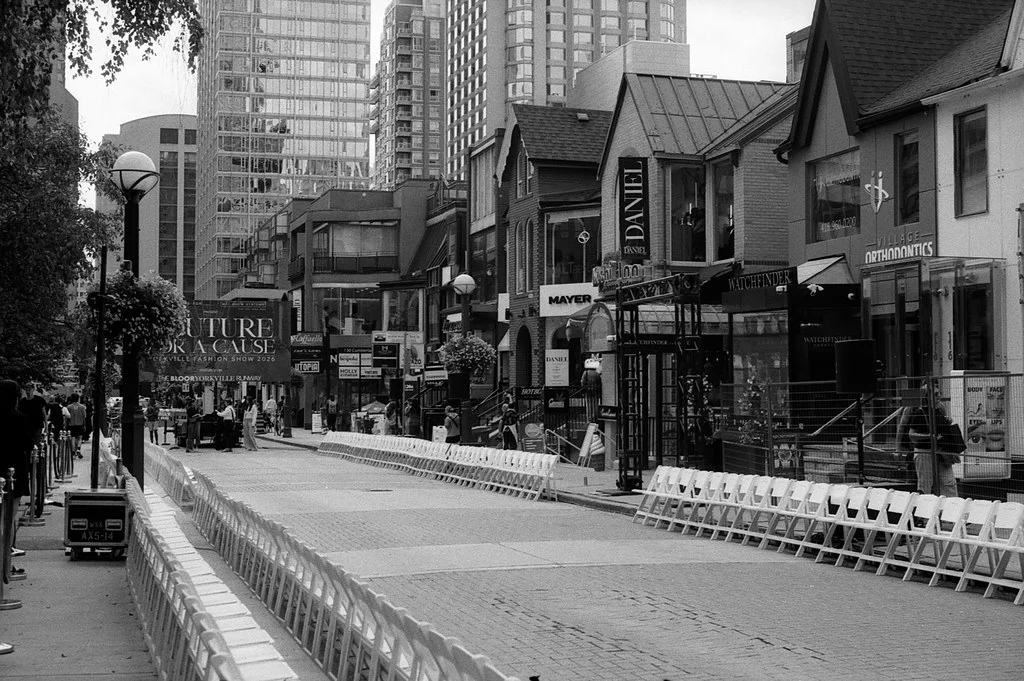
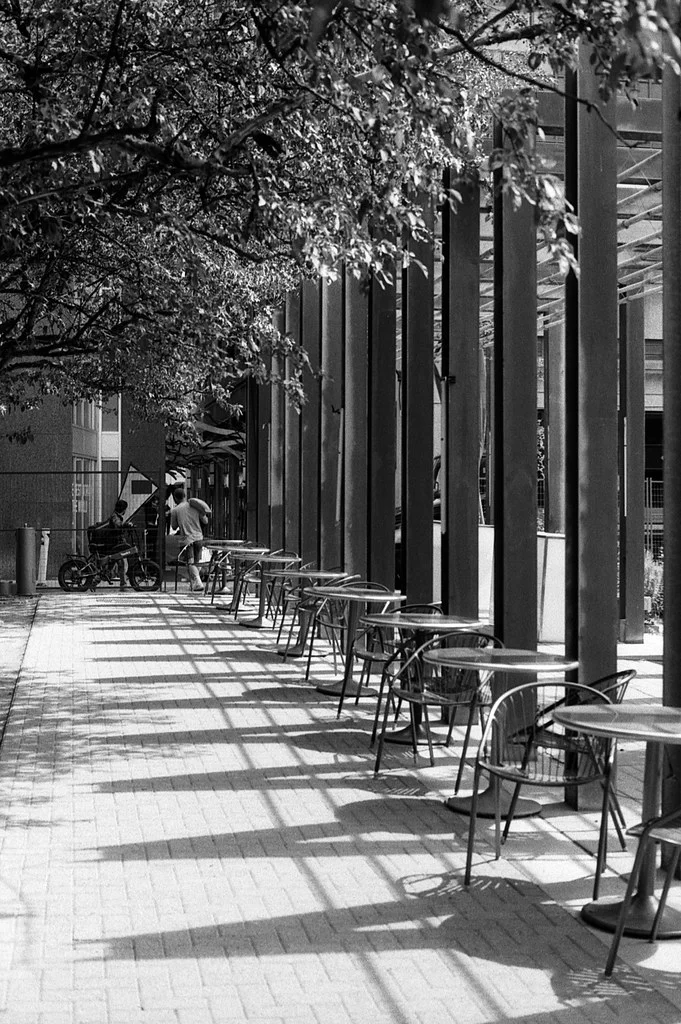
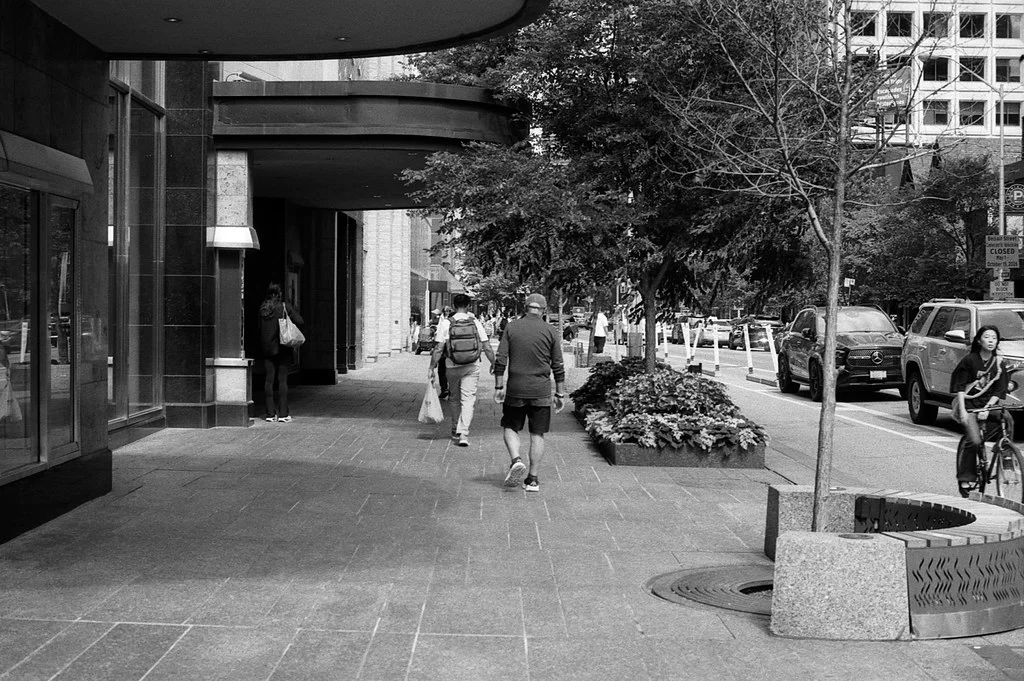
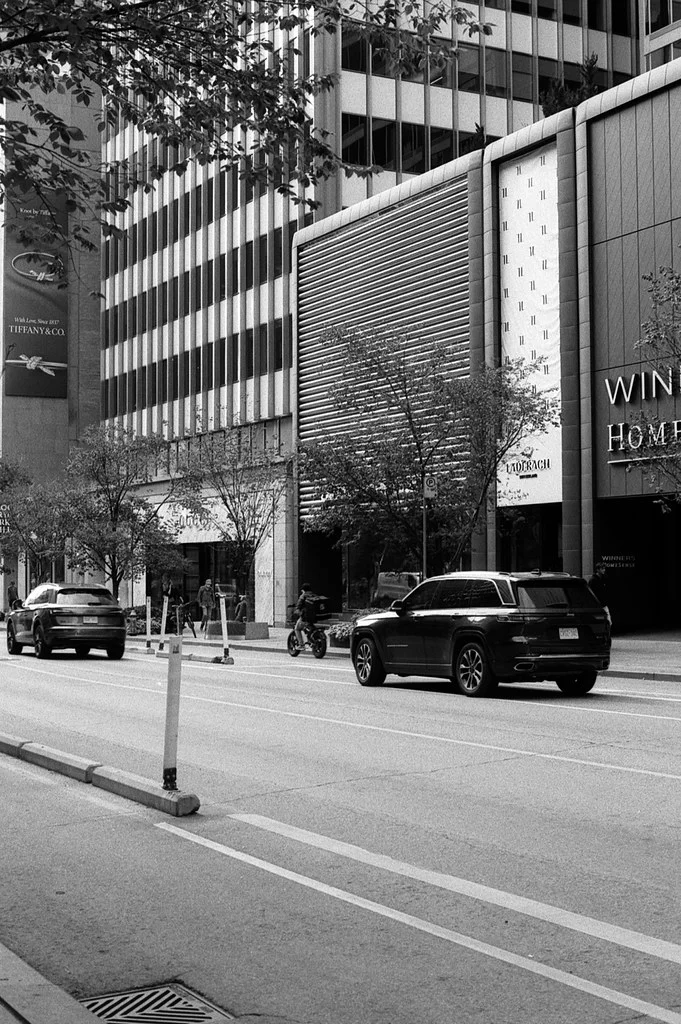
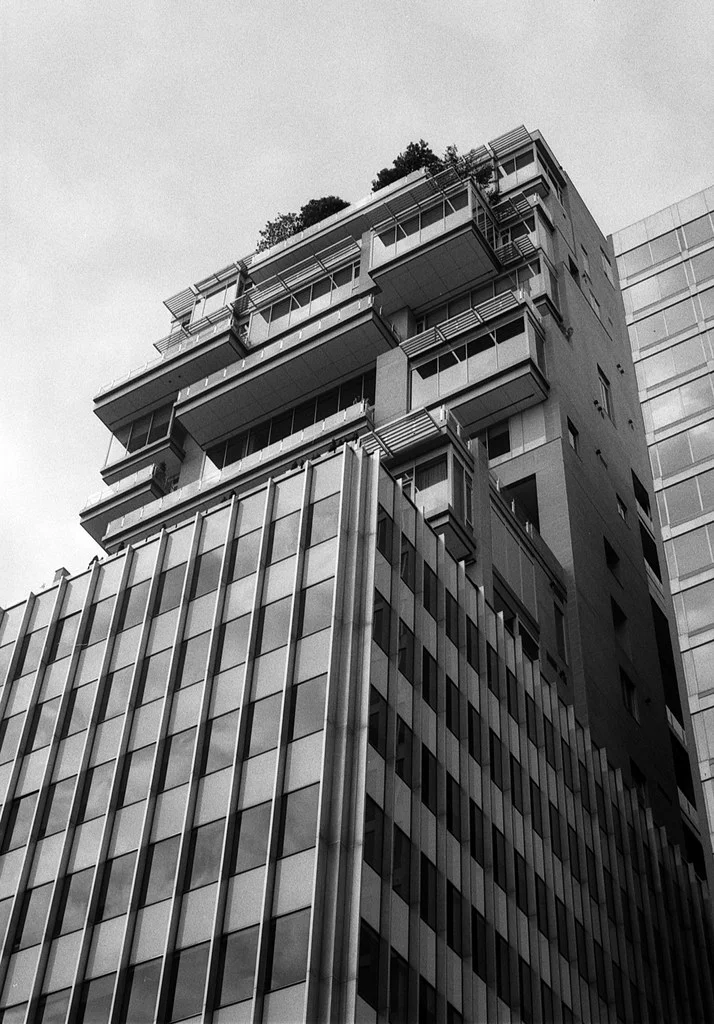
To illustrate, I took my cameras around various locations in Toronto, capturing everything from the architecture of Trinity College to the bustling vibe of Yorkville. Each image tells a story, showcasing the unique character of the city and its inhabitants:
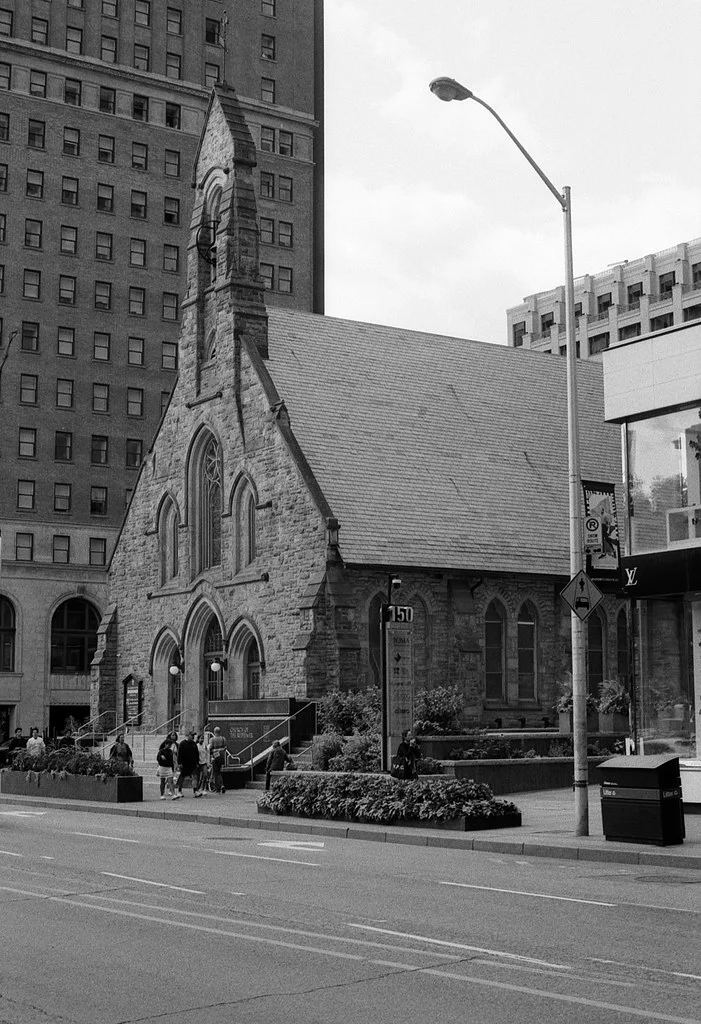
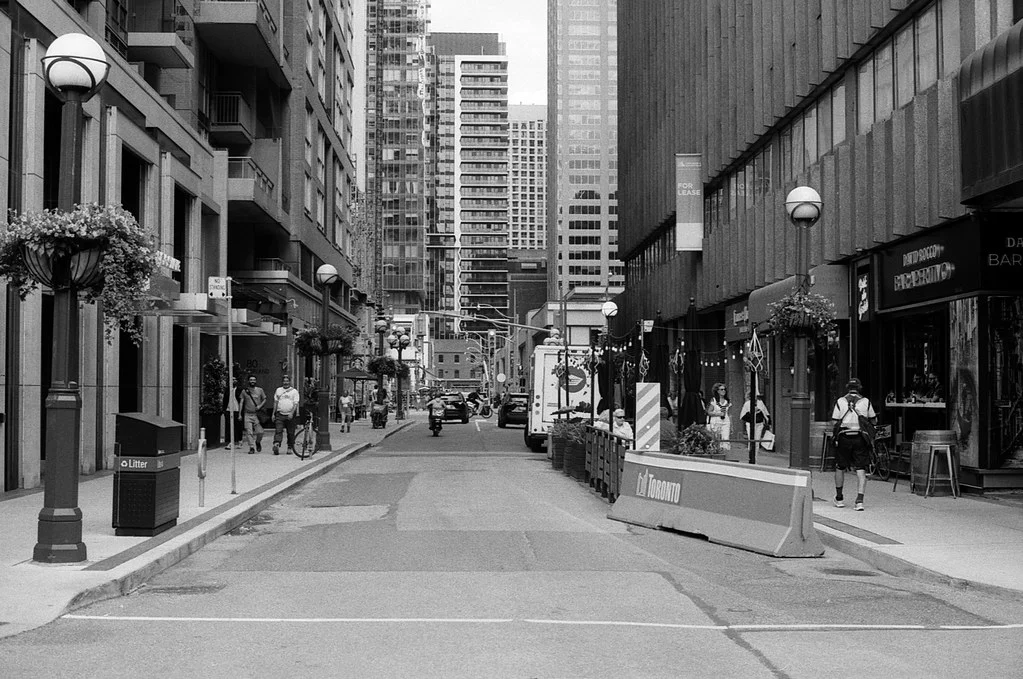
Train Behind the Tranzac Club, captured with a focus on the interplay of light and shadow.
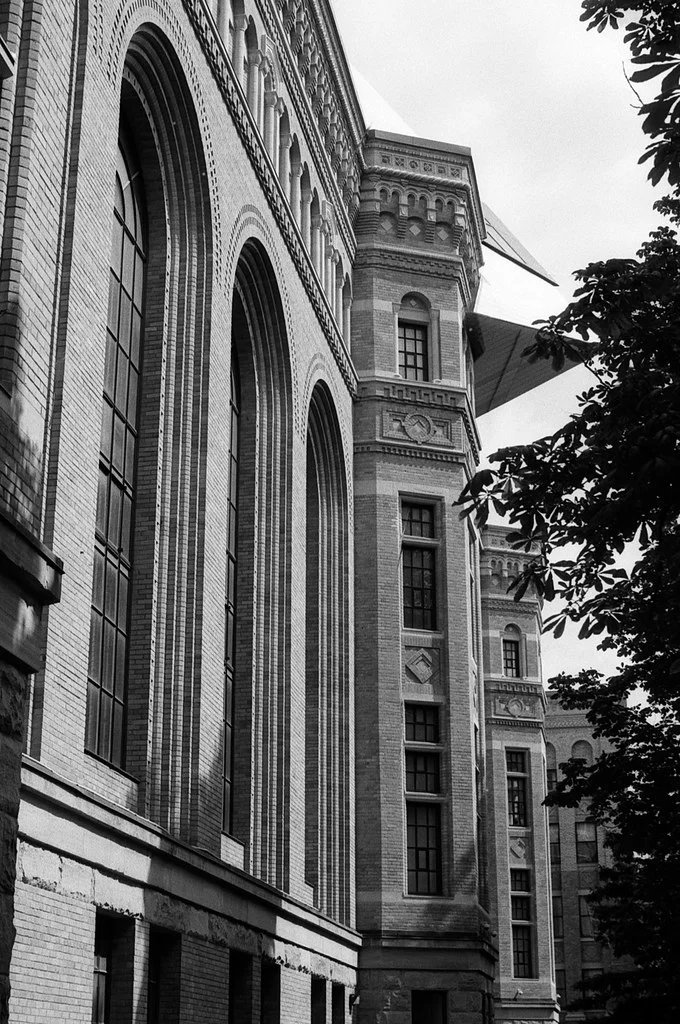
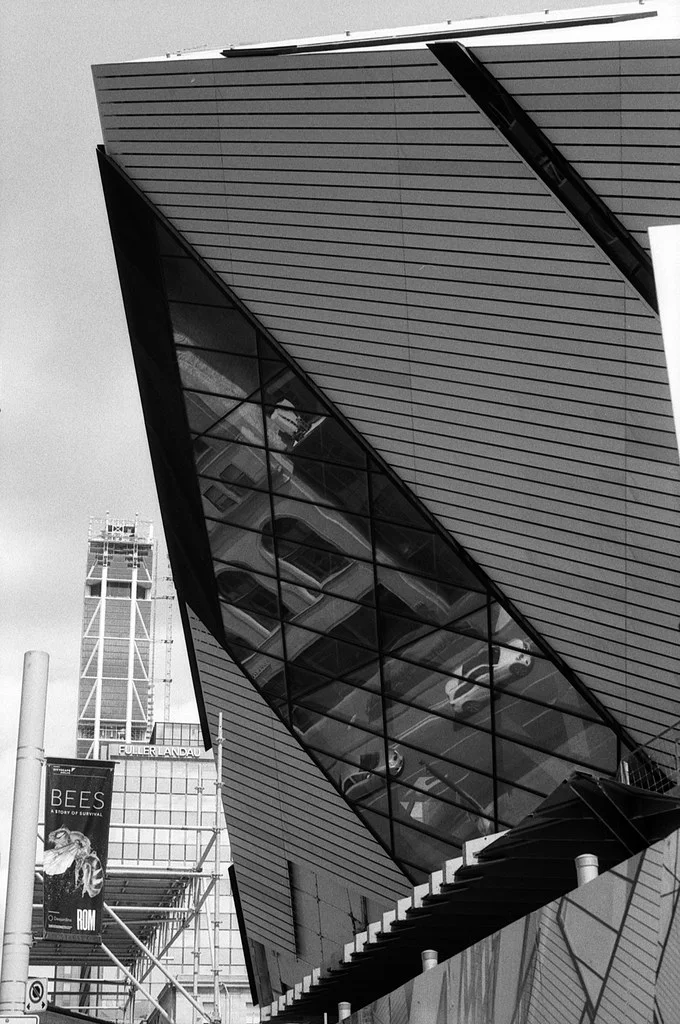
Showcasing the architectural details of the ROM Crystal, with Kentmere’s sharpness revealing intriguing textures.
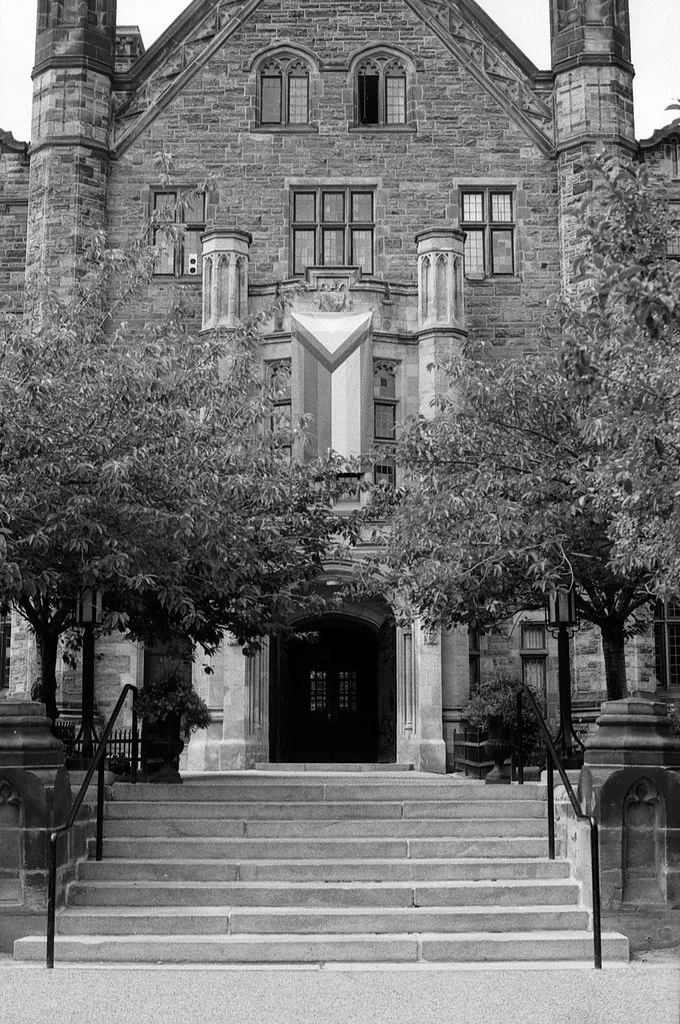
These captured moments underscore the film’s ability to render colors and details beautifully, something that digital often struggles to replicate.
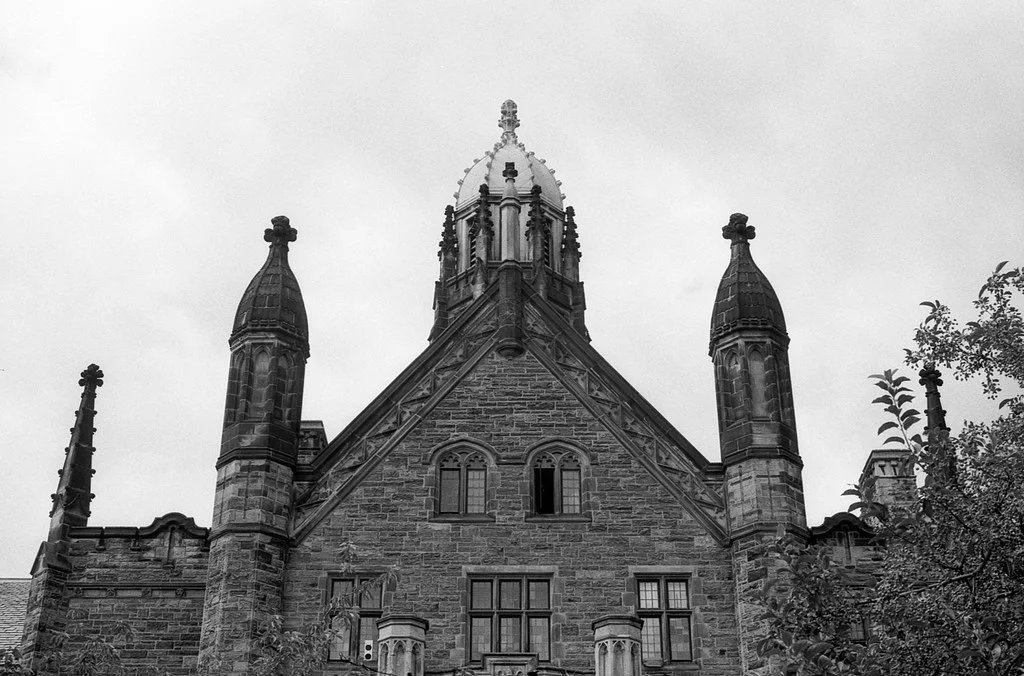
Final Thoughts
Using Kentmere 100 with the Nikon FM was a delight, steeped in the enchanting allure of film photography. For those looking to explore this medium, I highly recommend experimenting with different lighting conditions and compositions to best leverage the film's capabilities. Each photograph taken with this combination not only reflects my passion for photography but also captures the spirit of the urban landscape I love. Whether you're a seasoned pro or just starting, there’s magic to be found in each frame you expose.
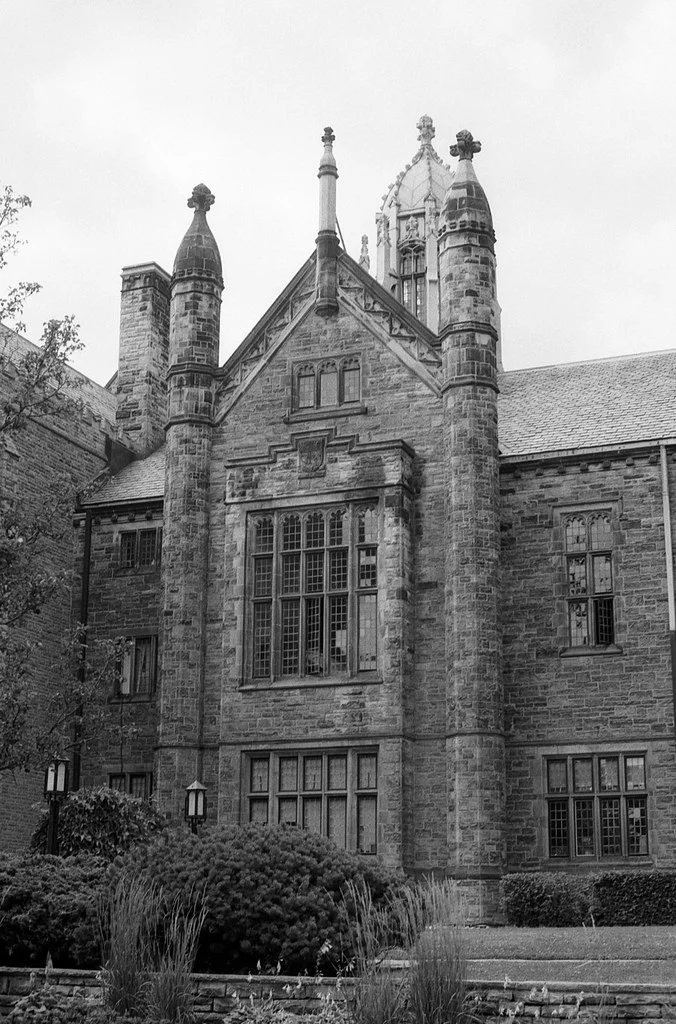
So, grab your Nikon FM, load up on Kentmere 100, and get out there—you won't be disappointed by what you create.