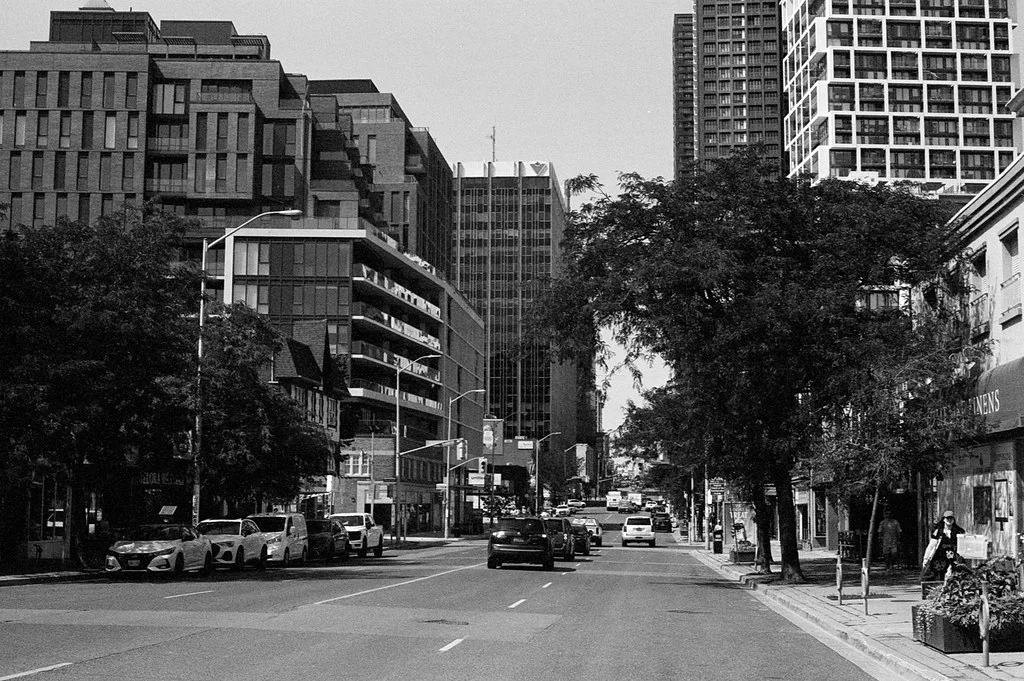
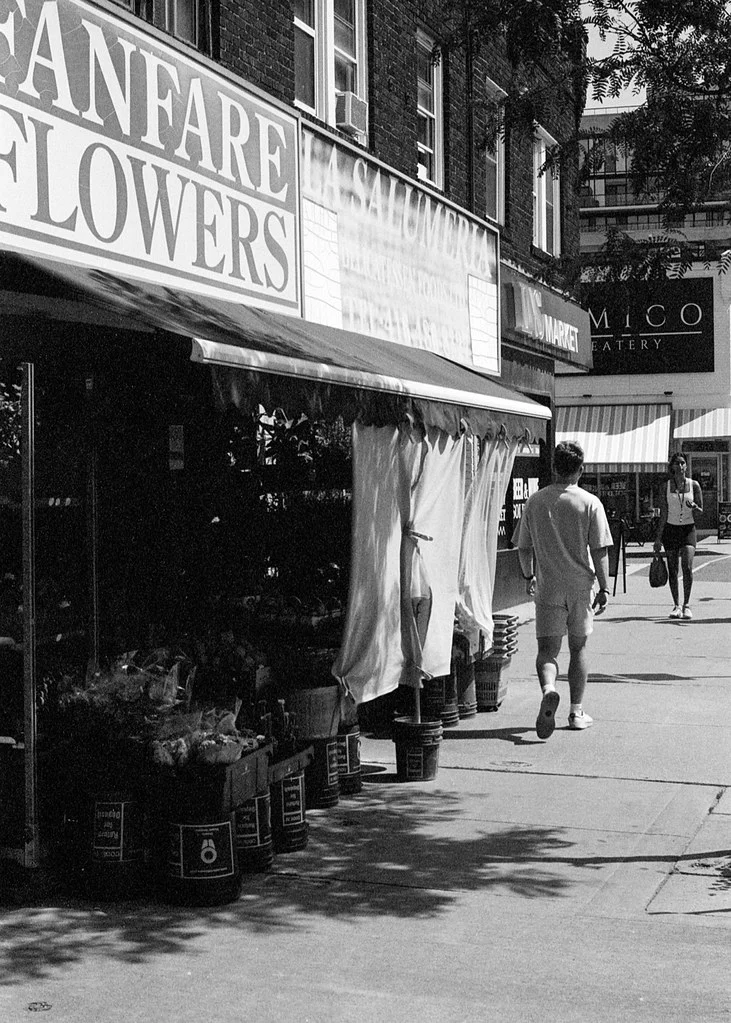
Join the photographer on a mid-summer stroll through Toronto using a Nikon F and Adox CHS 100 II, capturing the essence of everyday urban life.

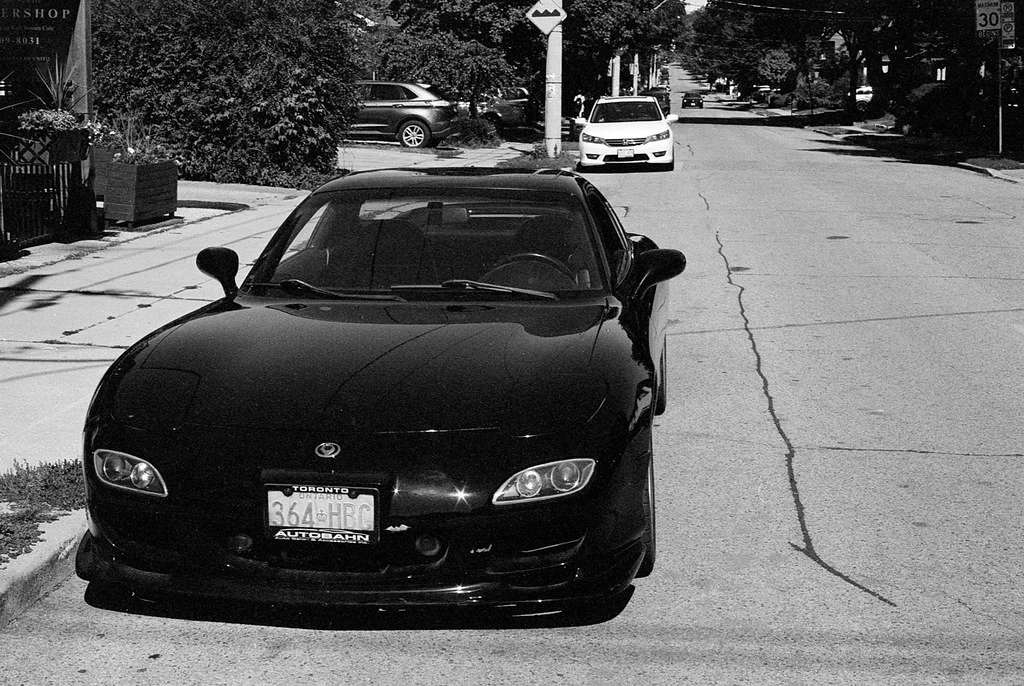
On a bright summer day, I decided to take a leisurely walk through my neighborhood, armed with my father’s classic Nippon Kogaku Nikon F. This manual 35mm film camera, a true gem in the world of photography, offered me the opportunity to reconnect with my roots while appreciating the simple beauty around me. I paired the camera with Adox CHS 100 II film, known for its sharpness and tonal range, albeit with certain quirks that demanded attention.

The weather was near perfect: clear skies and a warm sun made for excellent shooting conditions, though I soon found that the bright light pushed the contrasts of the photos higher than anticipated. While I thoroughly enjoy using Adox CHS 100 II for its fine grain and distinctive rendering, it can be less forgiving than other films like Ilford FP4 Plus or Kodak T-Max 100. The challenge here was striking the right balance between exposure and highlight retention, especially when relying on the camera’s metering system.

Choosing the Right Settings
To make the most of my outing, I adhered to the ‘Sunny 16’ rule for exposure. This technique suggests an aperture of f/16 and a shutter speed matching the ISO rating of the film when outside in bright sunlight. For instance, with Adox CHS 100 II, that equates to a shutter speed of 1/100s. However, when the shadows appeared deeper, I utilized my Sekonic L398a light meter to finely adjust my exposures.

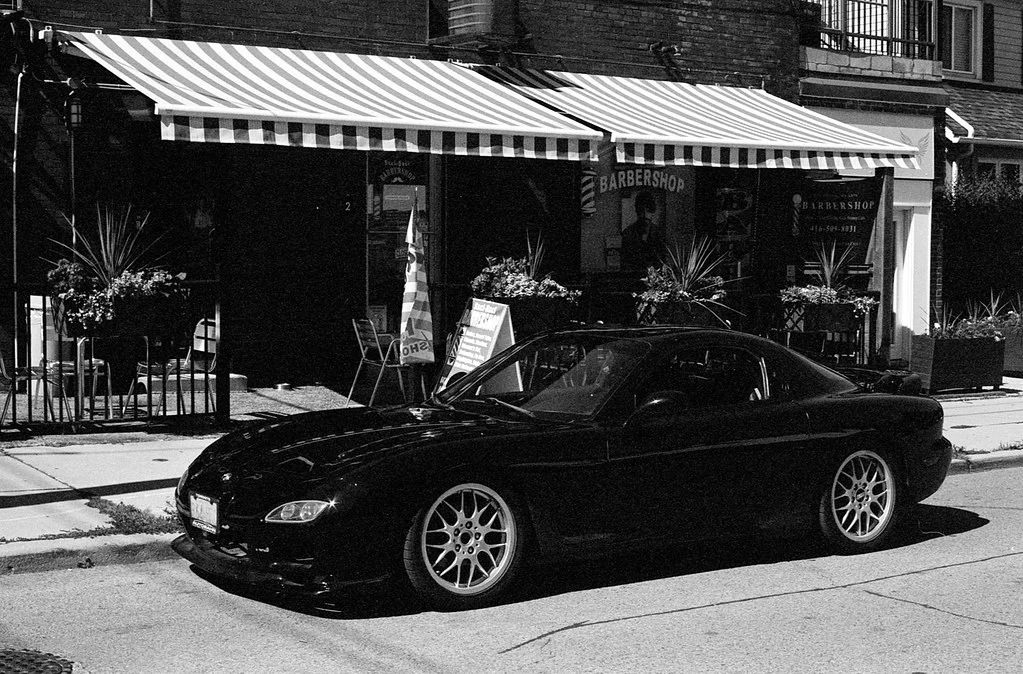
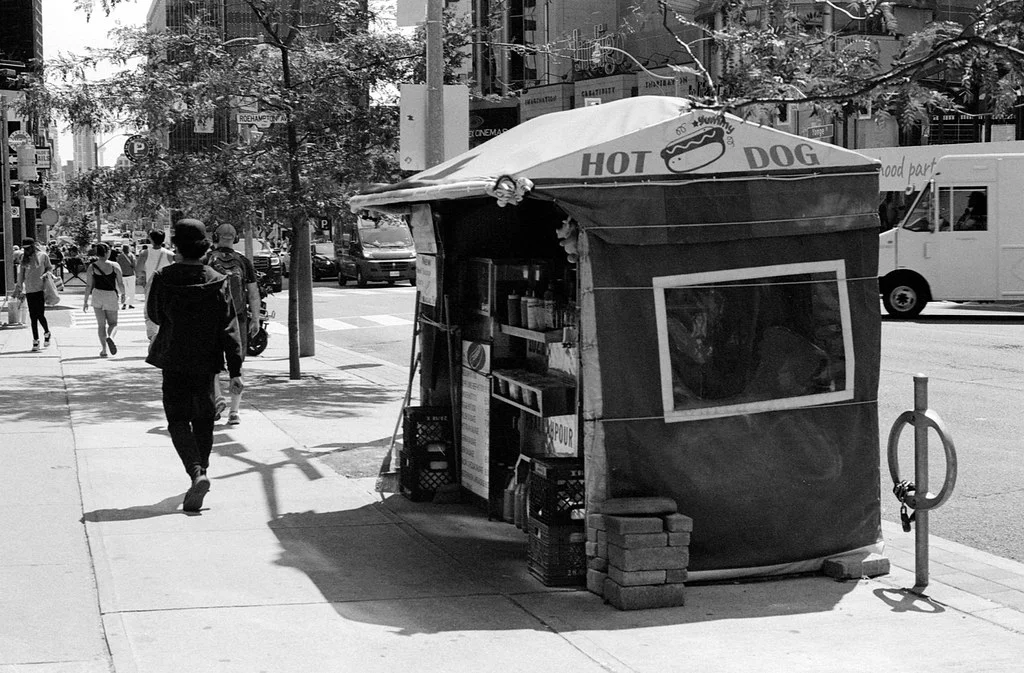
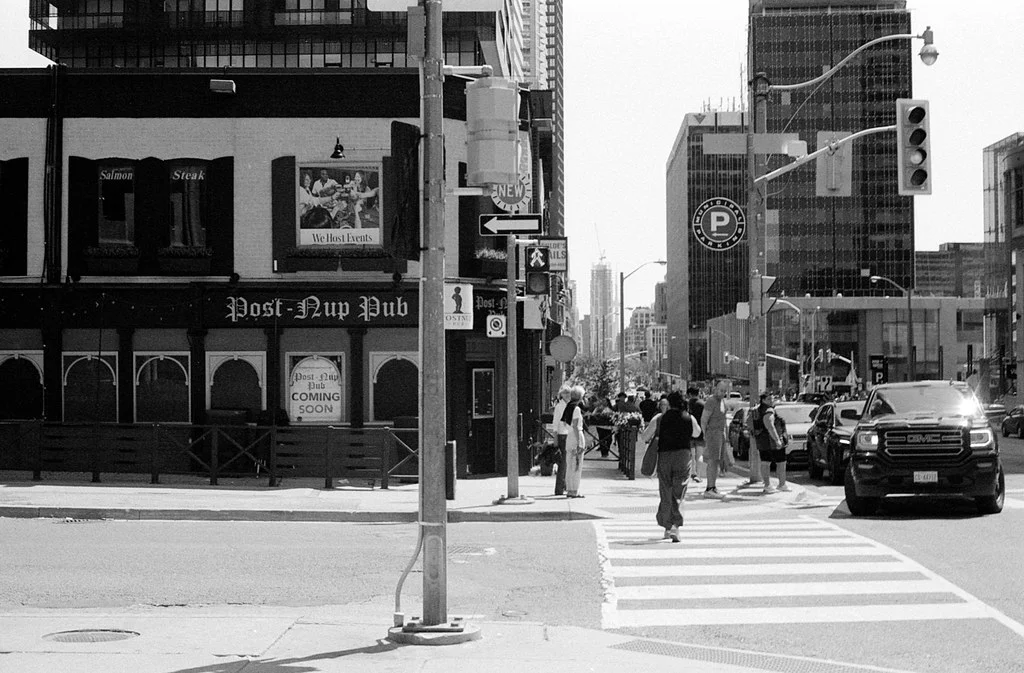
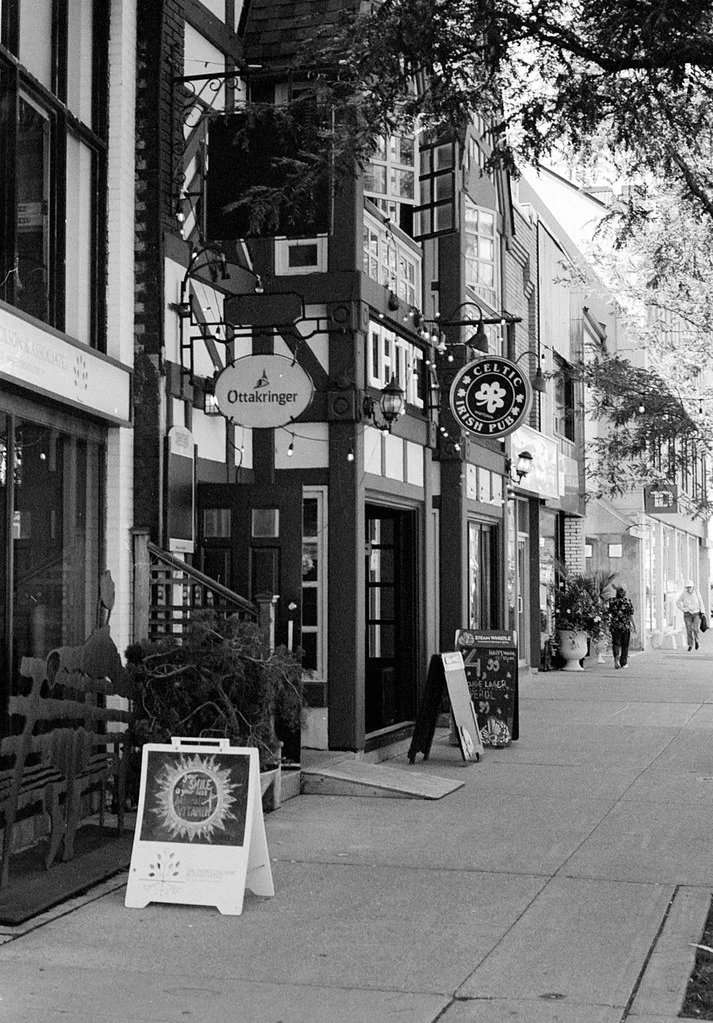
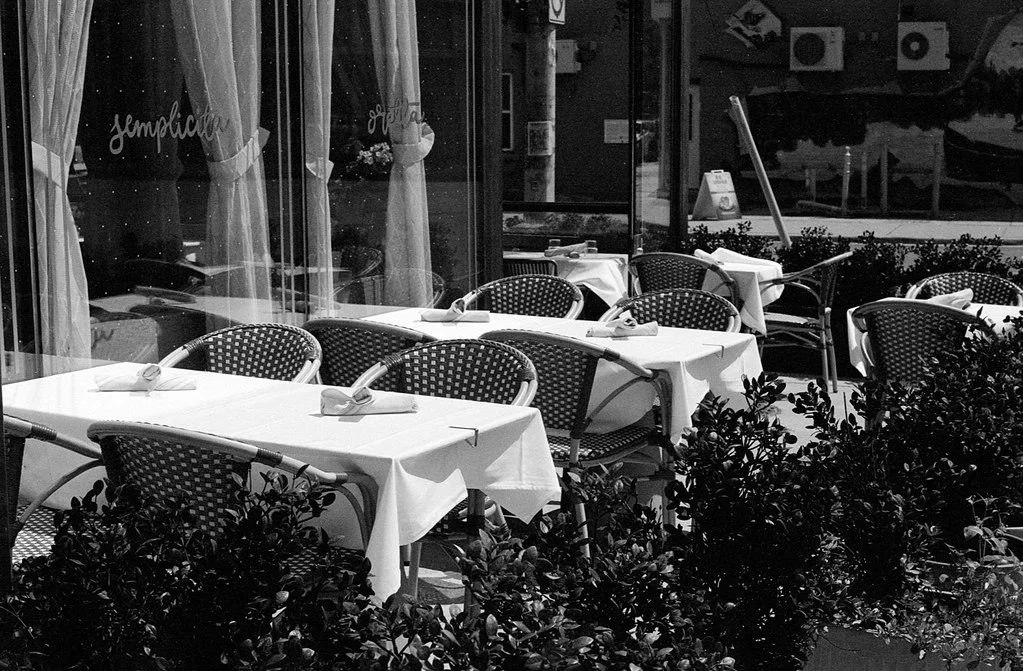
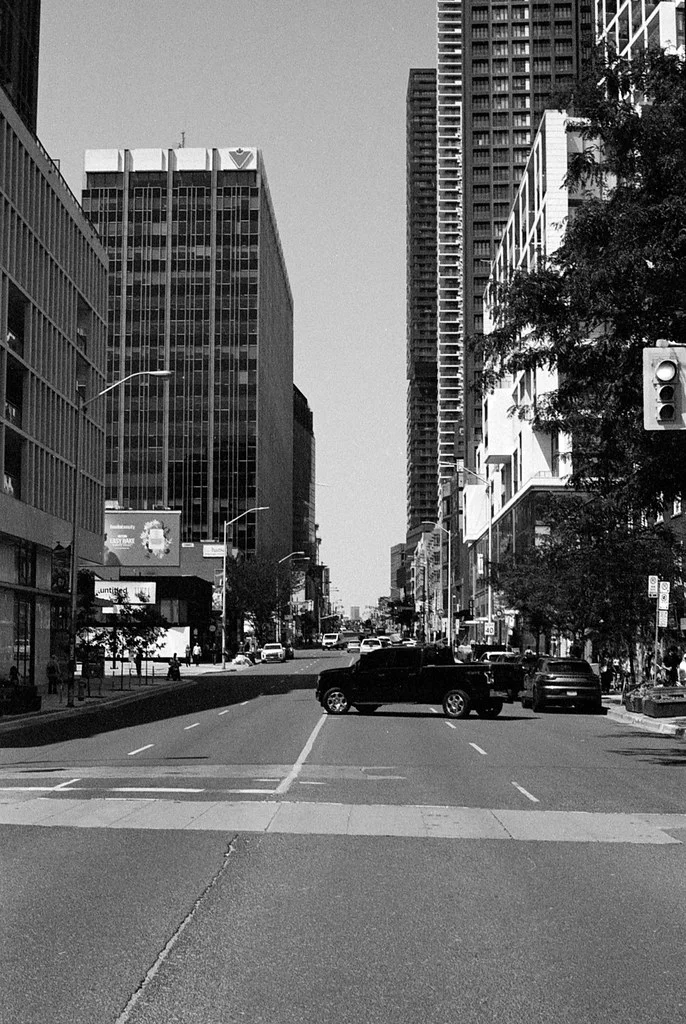
There were several moments during the walk where I observed scenes that begged to be captured—clusters of people milling about cafes, children playing in the park, and the enchanting architecture of urban buildings. Each shot required careful composition and an understanding of the available light, and I took my time to adjust the framing and angles to achieve the desired effect. I also paid close attention to depth of field, often opting for a wider aperture to create separation from the background while ensuring subjects were distinctly focused.
Engaging with the Environment
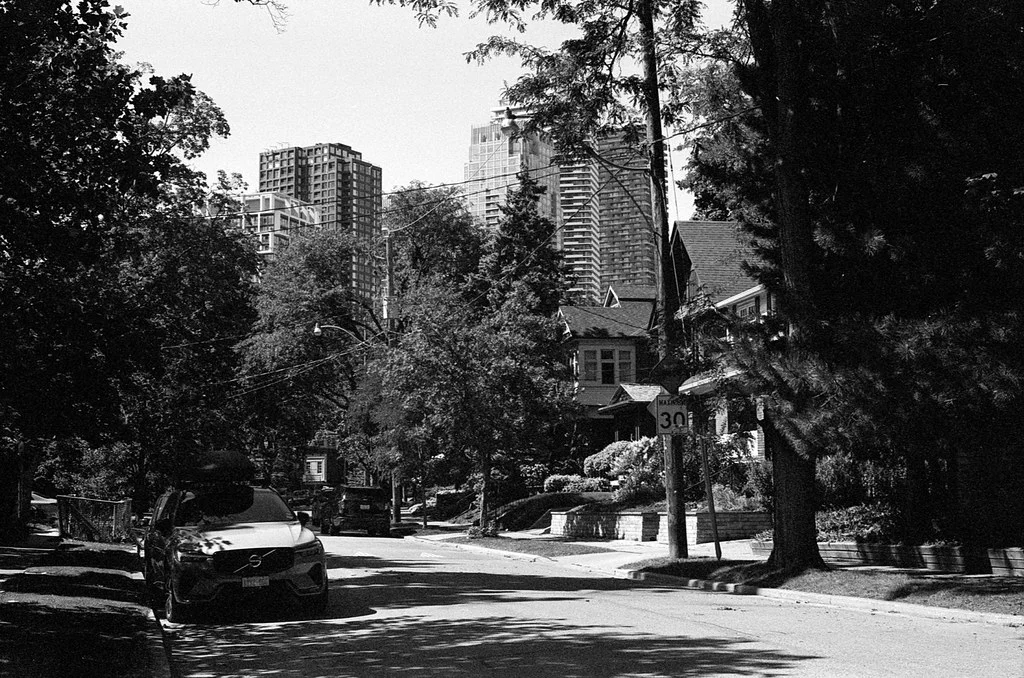
Some noteworthy locations in my neighborhood included the vibrant streets of Toronto, where murals and historical buildings added a splash of character. Locations such as the Celtic Pub and local cafes offered rich scenes, ideal for still life compositions or candid photography. The Nikon F's reliable metering helped manage the intensity of these varied lighting situations.
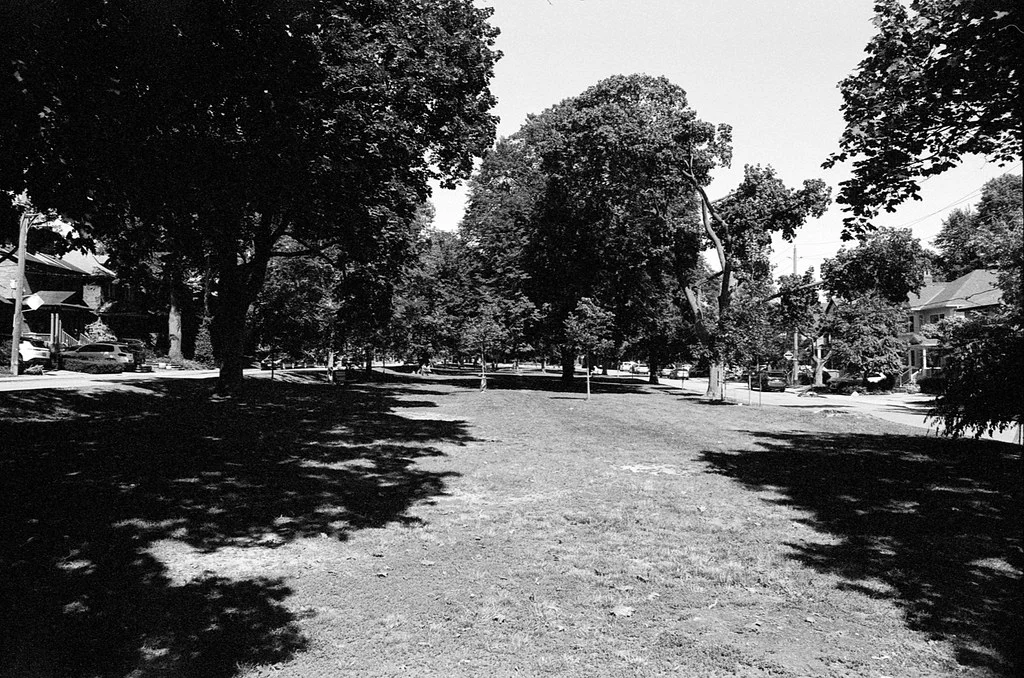
Throughout my journey, the Nikkor pre-AI lenses did not disappoint, providing sharp images and beautiful bokeh renderings. For example, I found that the Nikkor S 50mm f/1.4 lens performed exceptionally well, capturing detailed textures of both people and urban landscapes alike. This lens’s ability to gather light in dim conditions was invaluable, especially as the sun dipped lower in the sky.
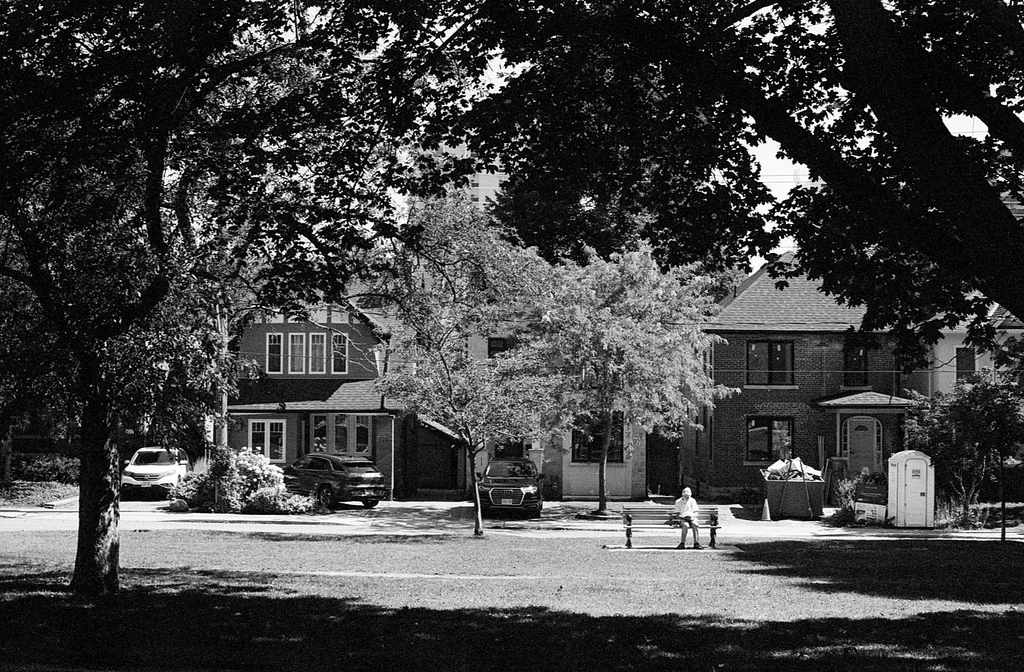
Developing and Printing
After the shoot, I processed the film using FX39 1+9, a developer known for enhancing the unique characteristics of Adox CHS 100 II. The development process was critical, as the relationship between the developer and the film influences the final image quality. While some reacted to the film’s contrast by adjusting development times, I maintained a standard process to see how the film responded to my metering in-store settings.
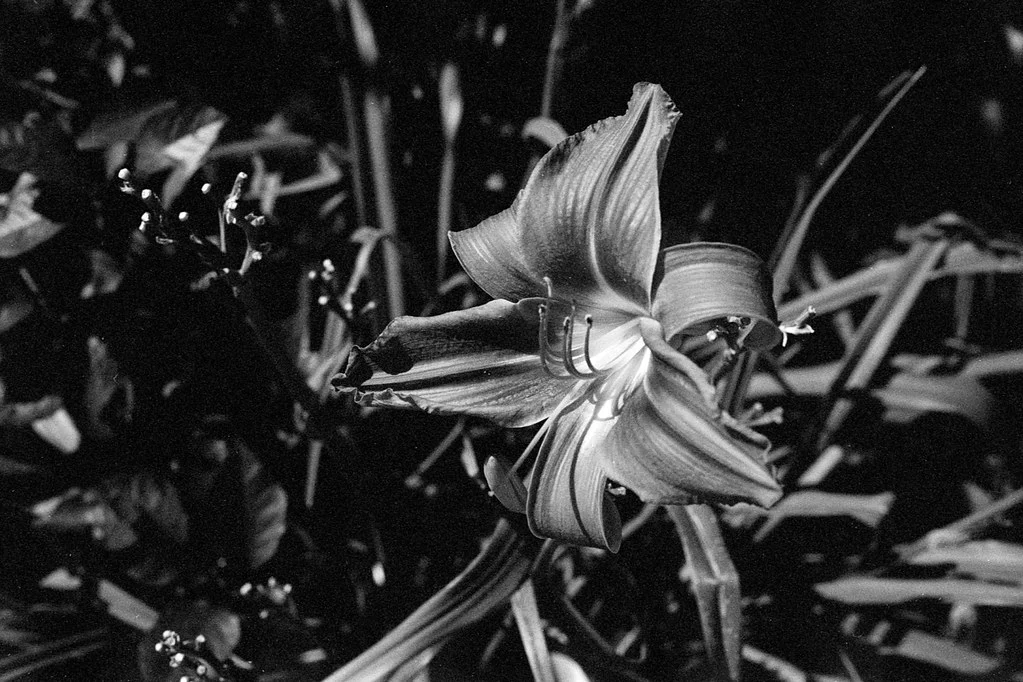
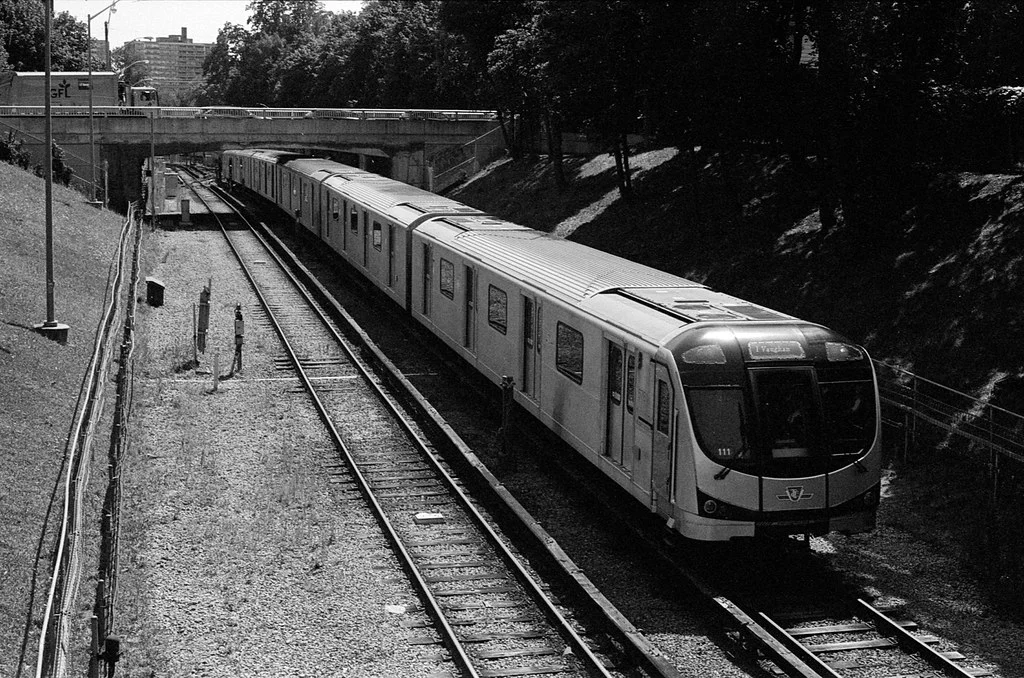
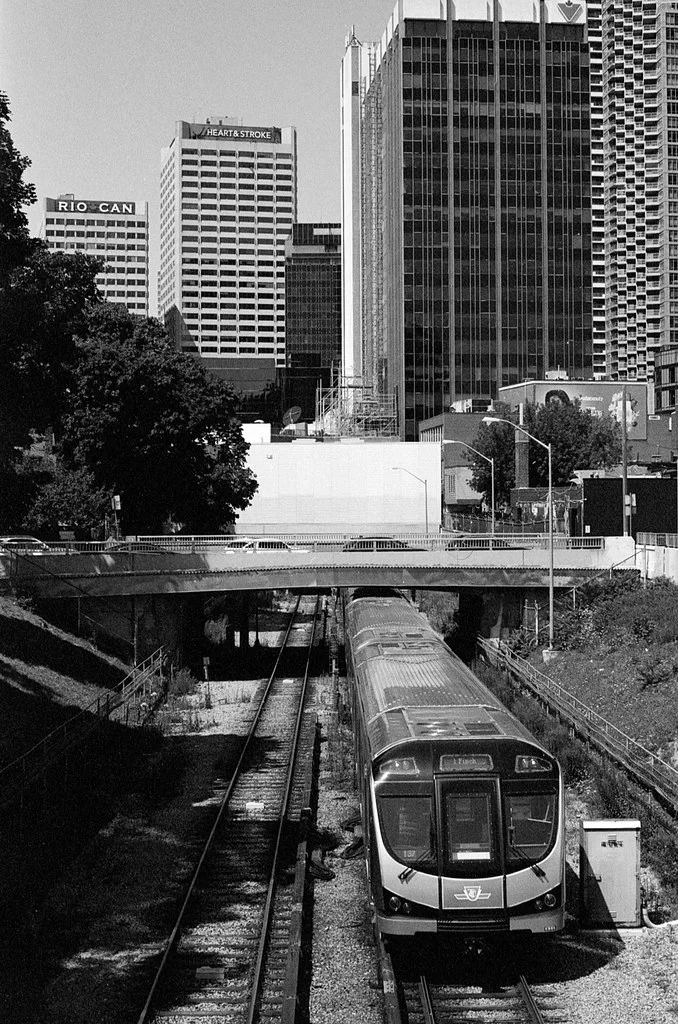
Once the film was developed, scanning the negatives revealed images with a pleasant tonal range and clarity. Each photograph felt like a window into that day, informing me of a scene that had transpired while I was merely passing through. The interplay between light and shadow underscored the charm of everyday life within this urban environment.

Reflections on the Experience
This outing with my father's Nikon F was more than just a simple walk; it was a creative exercise that reignited my passion for photography. There's something therapeutic about stepping outside with a dedicated purpose, allowing time to slow down while focusing solely on capturing moments that often go unnoticed. The meticulous process of shooting film—metering, composing, and developing—provides a tactile experience that digital simply cannot replicate.
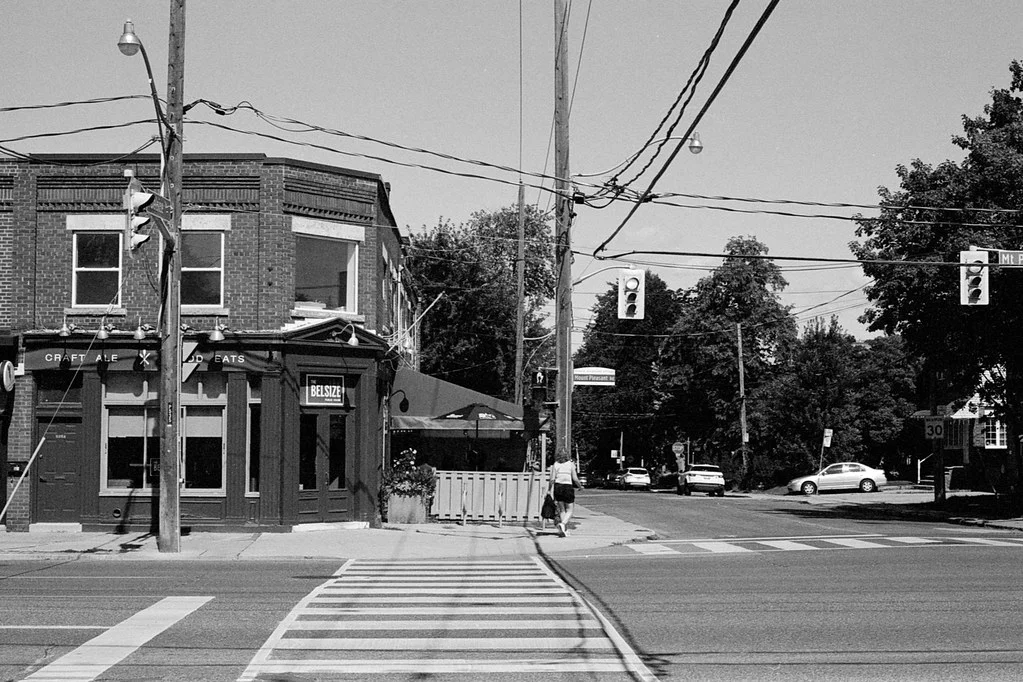
Moreover, using a vintage camera, especially one with family ties, adds emotional depth to the frame. Each picture becomes not only an artistic statement but a sentimental memory captured forever. As I look back on the series of shots, I appreciate their narrative: a day in the life of the neighborhood, through the lens of a classic Nikon.
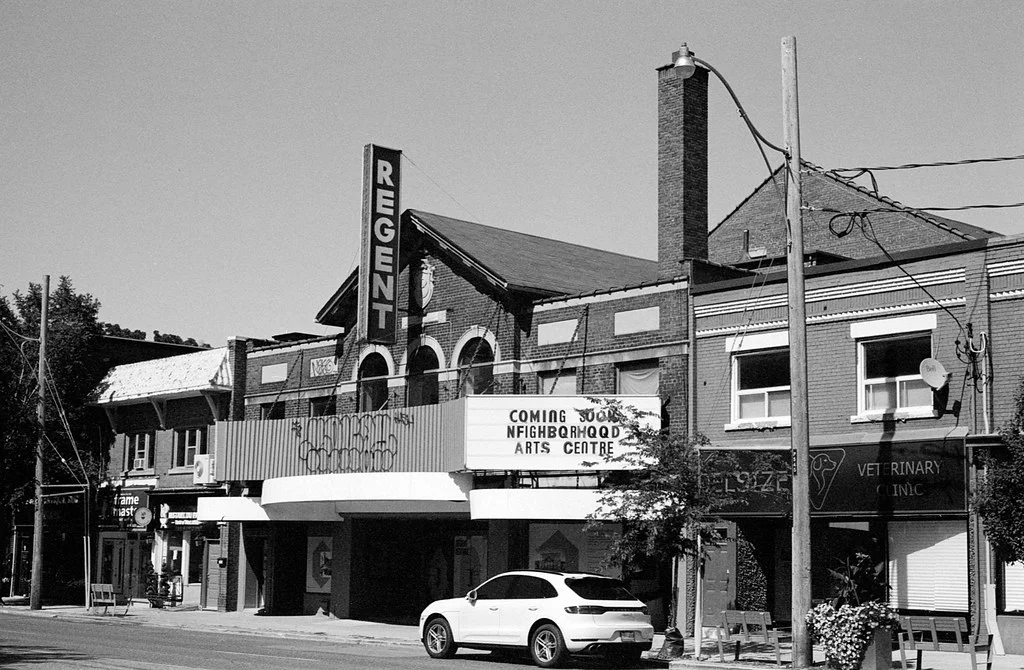
Ultimately, whether you’re using a Nikon F or a modern digital camera, it’s the act of photography that resonates deeply. The stories behind the images contribute to our shared human experience—one that connects memories, emotions, and creativity.
For more of my captured moments, check out the images below: