Explore expert techniques for capturing the Milky Way at Bryce Canyon, including settings, equipment, and the best times for celestial photography.
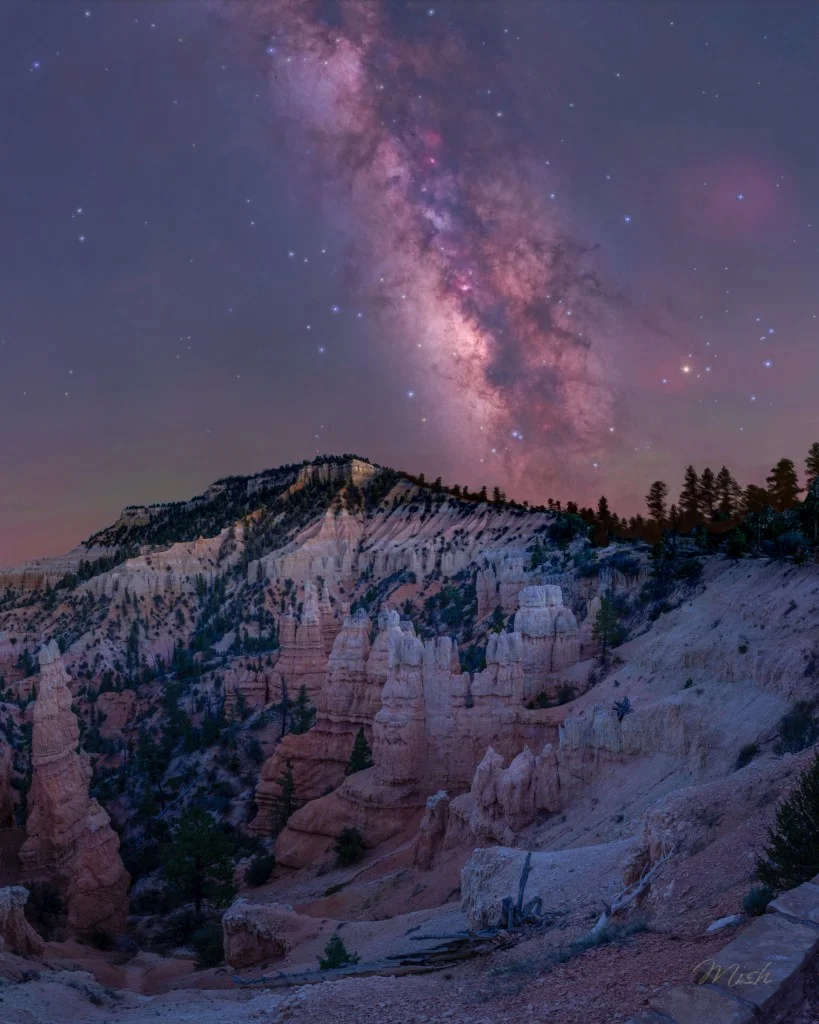
August and September offer optimal conditions for observing the Milky Way in Bryce Canyon National Park. With proper planning and the right techniques, photographers can capture stunning images of this celestial marvel against a breathtaking backdrop.
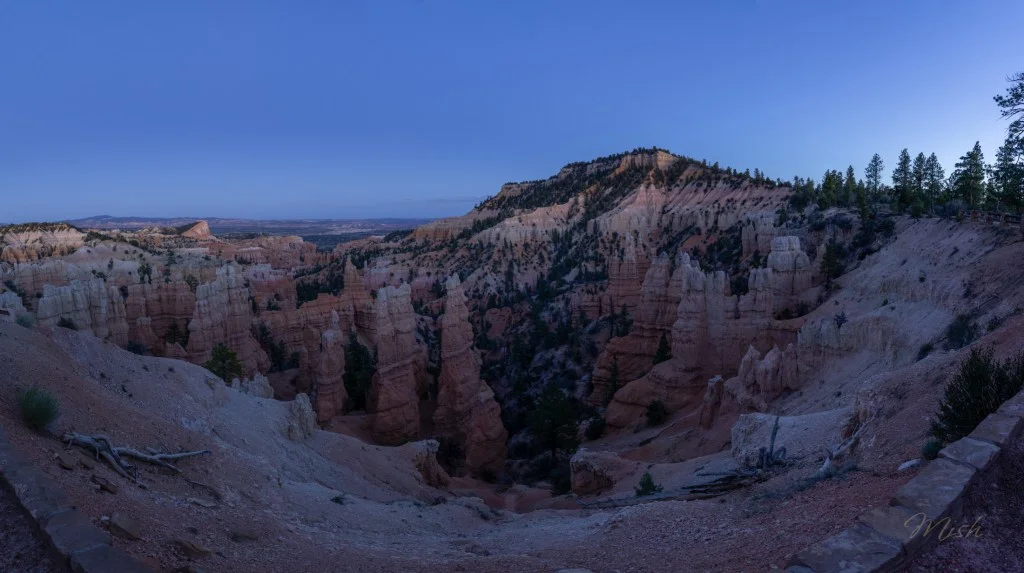
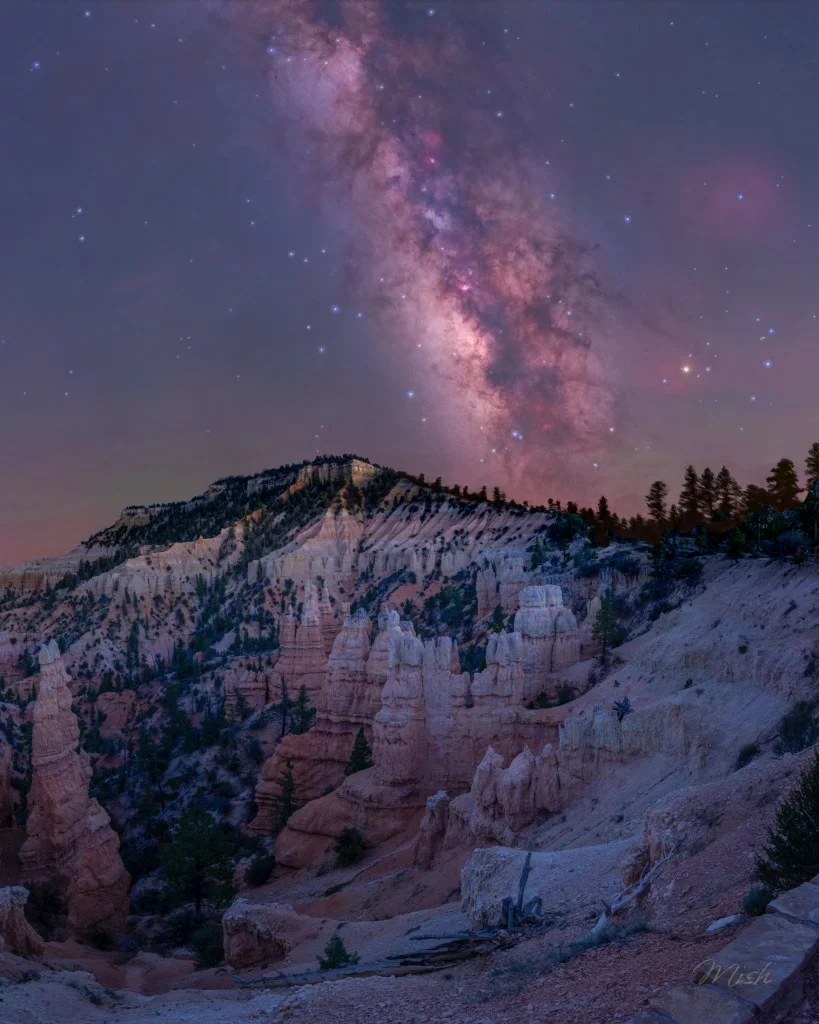
Image Composition Strategy
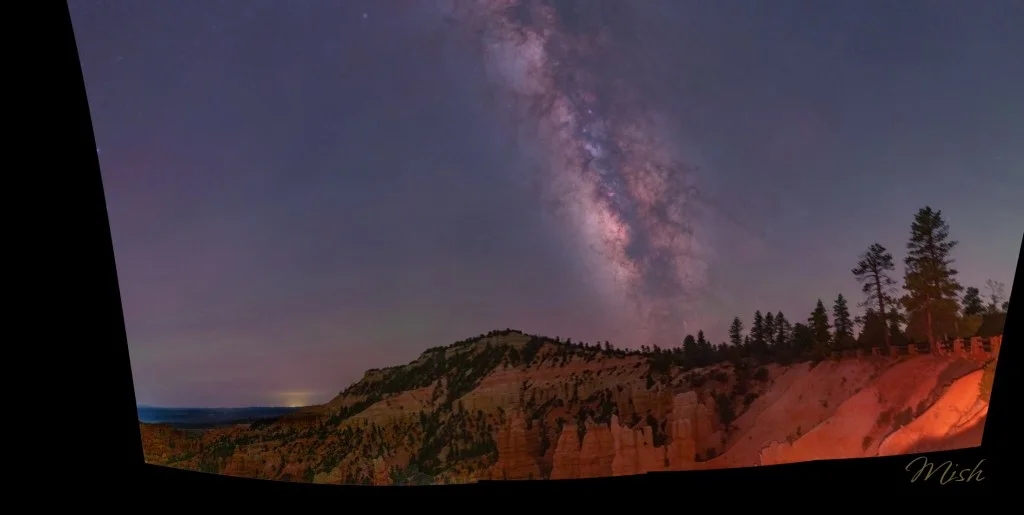
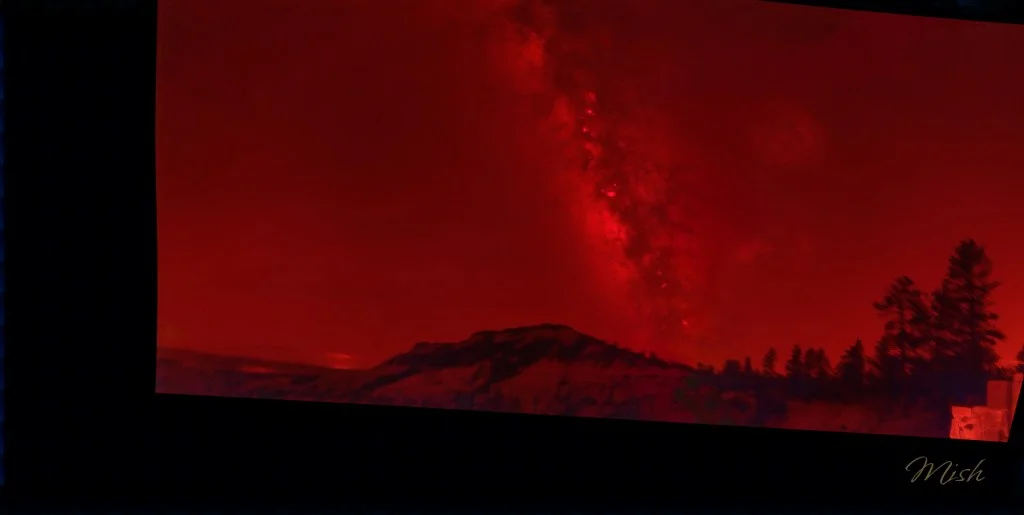
The captivating image of the Milky Way presented here is a blend of roughly 45 individual shots. This includes 15 images capturing the land, 15 featuring the Milky Way, and 15 taken with an H-alpha filter that isolates specific wavelengths of red light. This multi-layered approach allows for a rich, detailed representation of both the galaxy and the surrounding terrain.
Understanding the Milky Way
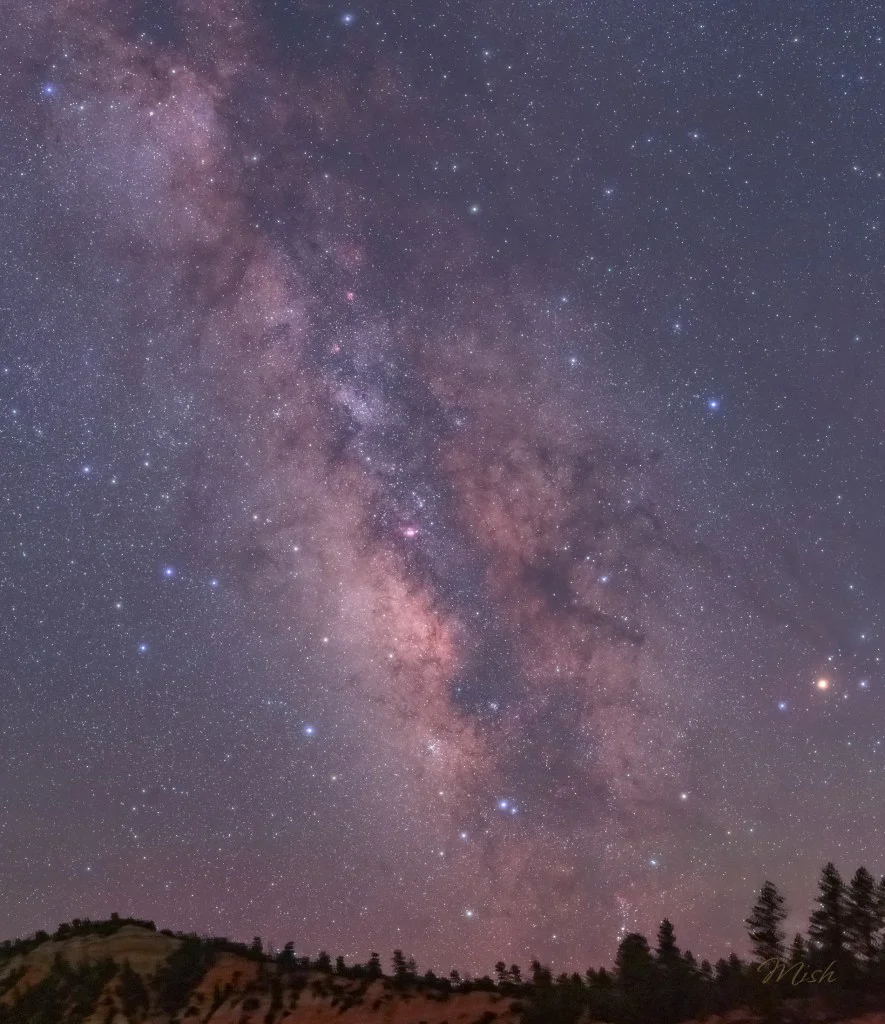
The Milky Way is not just an unbroken band of stars; its visible structure reveals dynamic features such as molecular clouds and nebulae. In many cases, excess stars can detract from these important details. Therefore, in the starless images, I've ensured that the core features of the galaxy remain the focus. The use of such techniques is crucial in astrophotography where conveying the beauty and depth of the celestial scene is paramount.
Capturing Blue Hour Blends
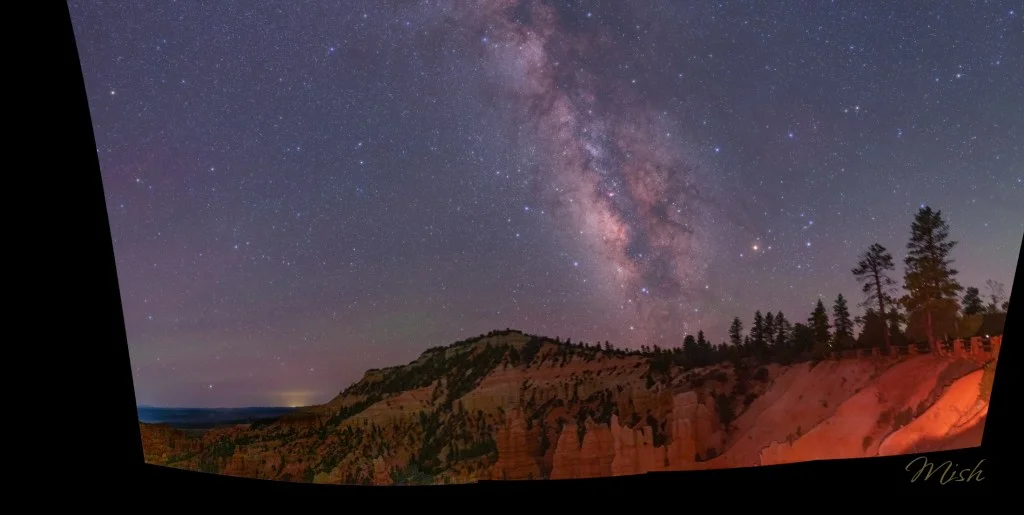
A technique I frequently use is the “Blue Hour Blends.” This period occurs roughly an hour after sunset before the sky darkens sufficiently to reveal the Milky Way. By photographing during this time, I can create an image with ample land and sky area, allowing flexibility in cropping while avoiding edge distortion. These components are then blended in Photoshop, where I carefully select which stars to include in the final composition.
Milky Way Visibility Throughout the Year
Understanding the Milky Way's cycle significantly informs when to shoot. In March, it rises in the southeast in the early morning hours. By summer, particularly in July, photographers can witness the galactic core at its peak between midnight and 1 AM. As summer progresses into August, the galaxy assumes a striking diagonal, later rotating to a vertical position around 1 AM Mountain Time.
As fall approaches, the visibility of the core diminishes, with by late October, viewing limited to early evening sessions. During winter, the core shifts to the day side of Earth, offering a view mainly of the outer arms, characterized by faint bands of stars and a host of potentially observable nebulae.
Connecting with Orion in Winter
Orion, the Hunter, serves as an excellent guide for locating the winter Milky Way. The constellation's belt lies adjacent to a faint winter band that grazes the shoulder of the prominent star Betelgeuse, extending toward prominent stars like Sirius and traversing through various constellations.
Photographing the winter arch may require modified cameras to capture the red-emission nebulae effectively. Those equipped with such gear can achieve impressive results that highlight this typically less-visible Milky Way structure.
Techniques for Starry Night Photography
The approach to dealing with the sheer volume of stars, sometimes reaching over 250,000 in a single panel, can be daunting. Many astrophotographers prefer to reduce the number of visible stars in their images. While apps exist for this purpose, I’ve developed a method that allows for effective cleaning of star-heavy images, ensuring clarity in the representation of the Milky Way’s finer details.
Utilizing H-Alpha Filters
Using H-alpha filters requires precise management and can complicate night photography, especially for Canon users. Many opt to focus during daylight, securing their settings before the nightfall to prevent any drift. Conversely, Sony users often benefit from easy-focus features in their cameras.
Exploring Equipment Essentials
The photographs discussed here were taken with a high-performance RF-mount 20mm F1.4 Canon lens set at F2, fine-tuned down to F1.8 for H-alpha photography. This lens strikes an ideal balance between wide-angle capture and effective depth.
In addition, filters like the Capture-the-Atlas Night Filter enhance contrast against light pollution and reveal deeper hues within the nebulae.
The Learning Curve of Star Trackers
Employing a star tracker, such as the Benro Polaris, can yield striking results by counteracting Earth’s rotation during long exposures. This piece of equipment requires a commitment to understand its nuances and may involve significant investment in both time and practice. My experience with the Polaris began in March and took some months to master, emphasizing that success in astrophotography often hinges on patience and practice.
While these trackers can be valuable tools for achieving exquisite results, they’re not essential to success in astrophotography. A determination to learn and experiment is the most crucial aspect.
Final Thoughts and Further Exploration
Astrophotography, especially in locations like Bryce Canyon, presents opportunities for mesmerizing captures under uniquely dark skies. As photographers gather gear and develop techniques, they can uncover a new dimension of art in the night sky.
For more insights and equipment recommendations, please explore my detailed articles on astrophotography and related topics.


