Jana Hoffmann's stunning capture from the Isle of Eigg workshop illustrates the beauty of artistic interpretation through photography and editing skills.
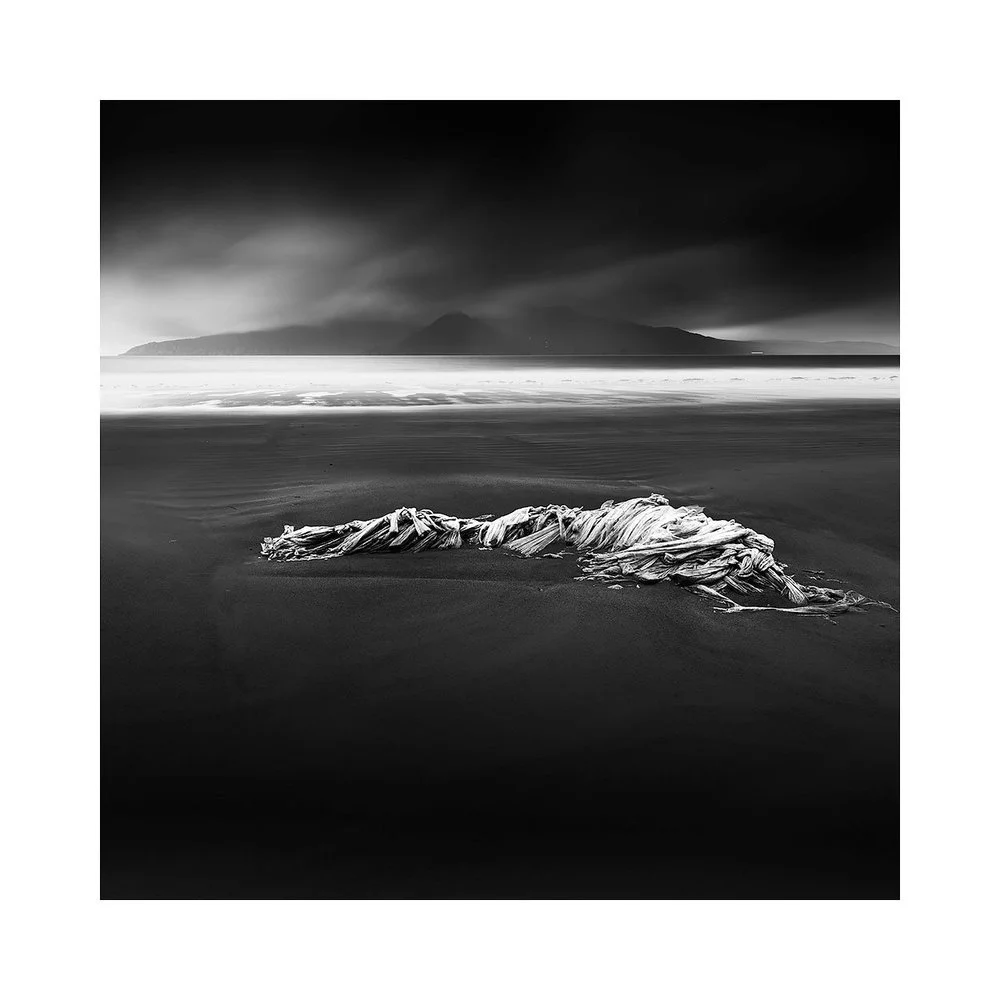
Jana Hoffmann's thought-provoking photograph, captured during a workshop on the Isle of Eigg, reveals a scene that initially leads the viewer to believe they are seeing a body wrapped in plastic. In reality, it's merely discarded plastic wrapping that has accumulated on Laig Bay — a poignant reminder of the litter that washes up on Eigg’s shores each year. This compelling image showcases not only the beauty of the landscape but also the important narratives surrounding waste and our environment. Here, Hoffmann effectively creates a visual dialogue that critiques our relationship with nature. Through her lens, viewers confront the stark contrast between pristine beauty and human negligence.
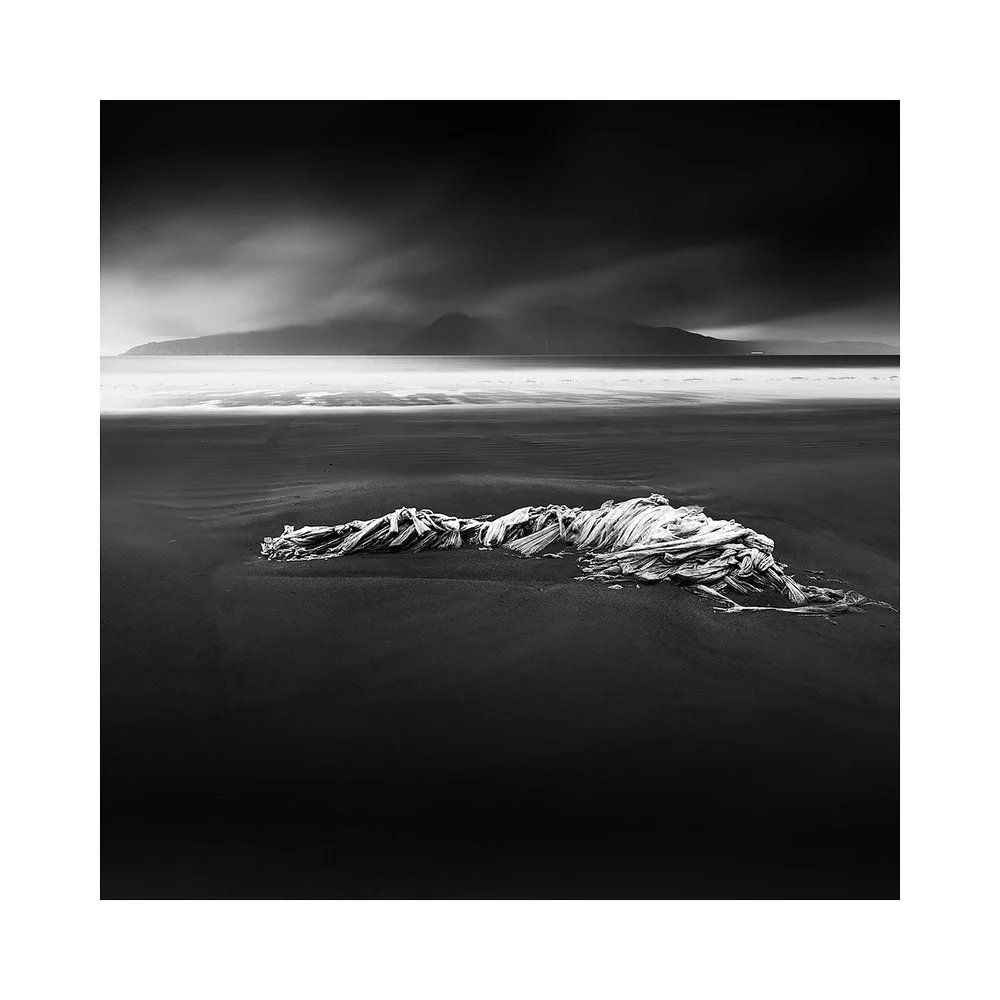
Image by Jana Hoffmann. Isle of Eigg workshop participant 2026.
The Power of Long Exposure
What truly elevates Hoffmann's image is the masterful use of long exposure. The background reveals the island of Rum, gracefully shrouded in mist and clouds, creating a mysterious atmosphere that contrasts beautifully with the sea’s gentle wash. Long exposure techniques allow photographers to capture movement over time, transforming the ordinary into something ethereal. This element of the photograph draws the viewer’s attention not just to the foreground but to the commanding presence of the seaside landscape, further emphasizing nature's beauty amidst human impact. It's a nuanced reminder that the environmental narratives we construct can be as layered as the images we create.
From Initial Doubts to Final Favorites
Interestingly, Hoffmann initially struggled with the editing of this photograph and even considered discarding it altogether. This experience is telling: many photographers can relate to the moment of doubt when their vision doesn't align with the result. However, by the conclusion of the workshop, it emerged as one of her favorite captures. This trajectory—from uncertainty to appreciation—highlights an essential lesson for photographers: sometimes the most powerful images take time and careful consideration to reveal their potential. Those moments of doubt often precede the breakthroughs that foster growth and artistic development; it’s in grappling with these challenges that one’s true style can begin to form.
Learning Through Editing
Throughout her workshops, Hoffmann focuses on the critical role that editing plays in photography. Many photographers mistakenly believe that good composition starts with the camera; however, Hoffmann advocates for the importance of the editing phase as a key component of the creative process. Here’s the thing: editing is not merely about correcting mistakes but rather about enhancing and refining an artist's vision. During this time, photographers can reassess their work, drawing out the underlying narratives they might have overlooked during capture. The ability to discern what works and what doesn't is a skill that can only be honed through practice and reflection.
Post-Processing Techniques
For those interested in incorporating advanced editing techniques, tools like Adobe Lightroom and Photoshop are often highlighted. While both programs have a learning curve, the key lies in grasping the 'what' in editing — not just the 'how'. Understanding the fundamental principles of interpreting a scene lays the groundwork for growth. Many photographers might find themselves lost in a maze of sliders and filters; without a clear vision of how they want their image to communicate, even the best tools can lead to results that feel flat. This brings us to a critical point: the editing phase is an extension of the creative process, one that demands as much vision and intuition as the initial capture.
As Hoffmann notes, images can be interpreted in countless ways. This reminds photographers that their interpretations are often colored by personal aesthetics and experiences. For less experienced editors, the challenge often lies in developing a keen sense of vision — the ability to 'see' artistic potential in their captures. Reworking an image can reveal deeper truths, but only if the editor is willing to engage thoughtfully with the material. (And this is the part most people overlook.) The real magic happens when you learn to see your own work with fresh eyes, unclouded by initial biases.
The Journey of an Image
Below, you'll find the initial black and white capture of this scene, taken without any filters applied. This version offers a stark contrast to the final, edited piece, providing insight into Hoffmann’s thought process during her editing journey. The grayscale image, though striking in its own right, lacks the depth and narrative that color brings forth in the final edit. It serves as a reminder of the transformative power of post-processing.
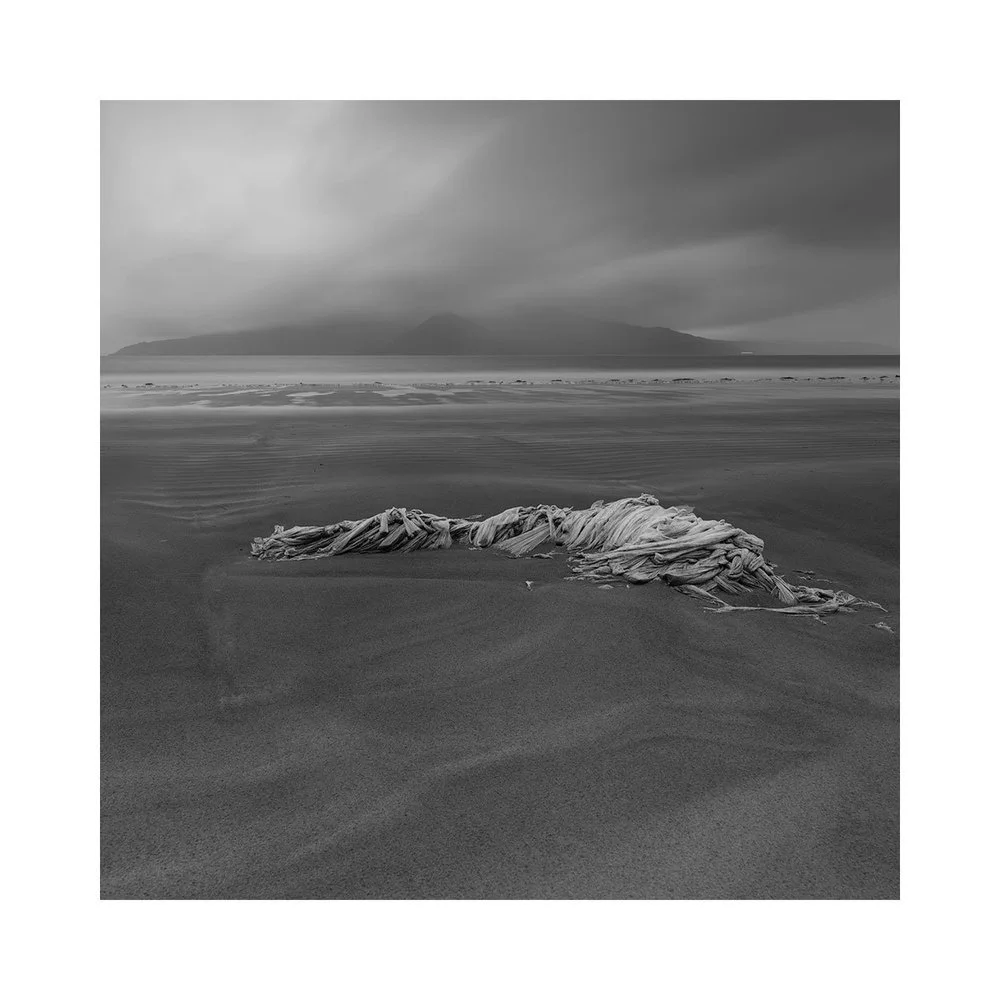
The journey of transforming an initial capture into a strong visual narrative is as important as the act of photography itself. Each step, from the initial click to the final edit, contributes significantly to the overall impact of the image. This concept resonates with many creatives: the process is just as vital as the finished product. It’s where intent meets realization, and where learning truly occurs.
Implications and Future Outlook
The implications of Hoffmann's approach extend beyond her photographs. In an age where photography is omnipresent, understanding the nuances of editing can elevate one’s work from the ordinary to the extraordinary. The focus on environmental narratives in her work encourages other photographers to reflect on the subjects they choose and the stories they wish to tell. If you're working in this space, consider the ethical implications of your chosen themes — what messages are you conveying through your images?
As we look ahead, the dialogue surrounding photography and environmental consciousness is likely to deepen. The role of editors will grow alongside technological advancements in software, broadening the scope of creativity and accessibility in this medium. This is more significant than it looks. The intersection of artistry and ecology can foster a new generation of photographers committed to not only capturing the world but advocating for its preservation.
Final Thoughts
Jana Hoffmann’s willingness to revisit and ultimately embrace her work serves as a reminder that patience and exploration are integral to the creative process. As photographers and editors, learning to interpret and manipulate visual narratives not only strengthens our skills but deepens our connection to the art form. Many thanks to Hoffmann for sharing her remarkable image and allowing us to explore the nuances of photography and editing together.


