Discover the fascinating interactions of hen harriers and other birds in the Humber region, showcasing their hunting tactics and territorial skirmishes.
The hen harrier, a remarkable raptor, has been the focal point of many enthusiasts observing its interactions with various bird species around the Humber region. These interactions provide a compelling glimpse into the predatory behaviors and social dynamics of these birds.
Hunting Dynamics and Target Species
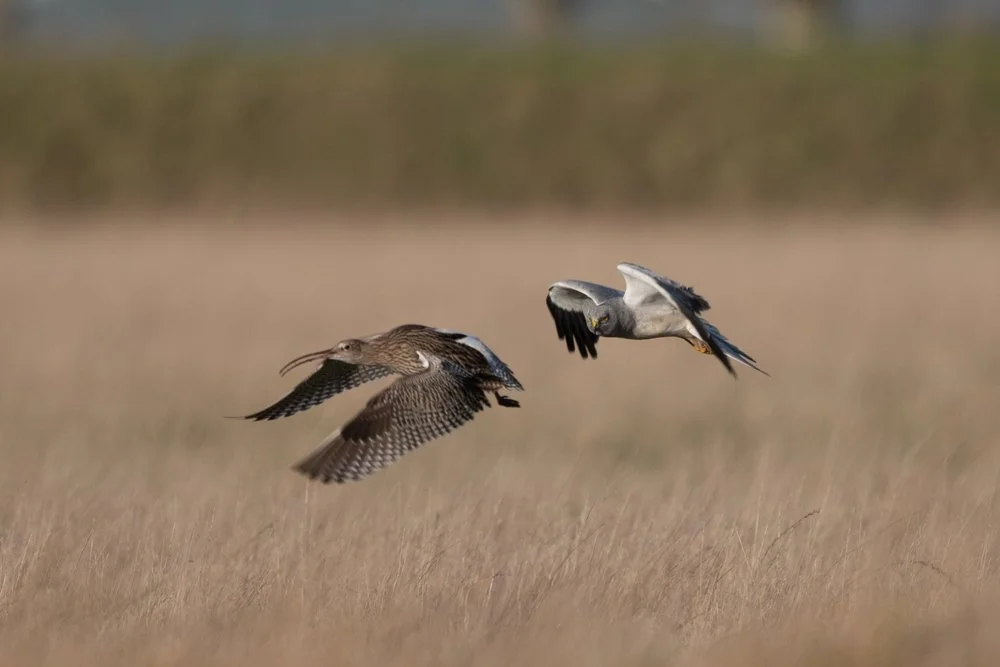
Primarily, hen harriers hunt voles, which are abundant in the area. However, their opportunistic nature means they might also target larger birds such as curlews or starlings when the opportunity presents itself. Understanding these hunting preferences can significantly enhance our approach to photographing these fascinating birds. For instance, capturing hen harriers in action requires knowledge of their feeding habits and a keen eye for spotting their movement patterns.
Decreasing Aggression from Rooks
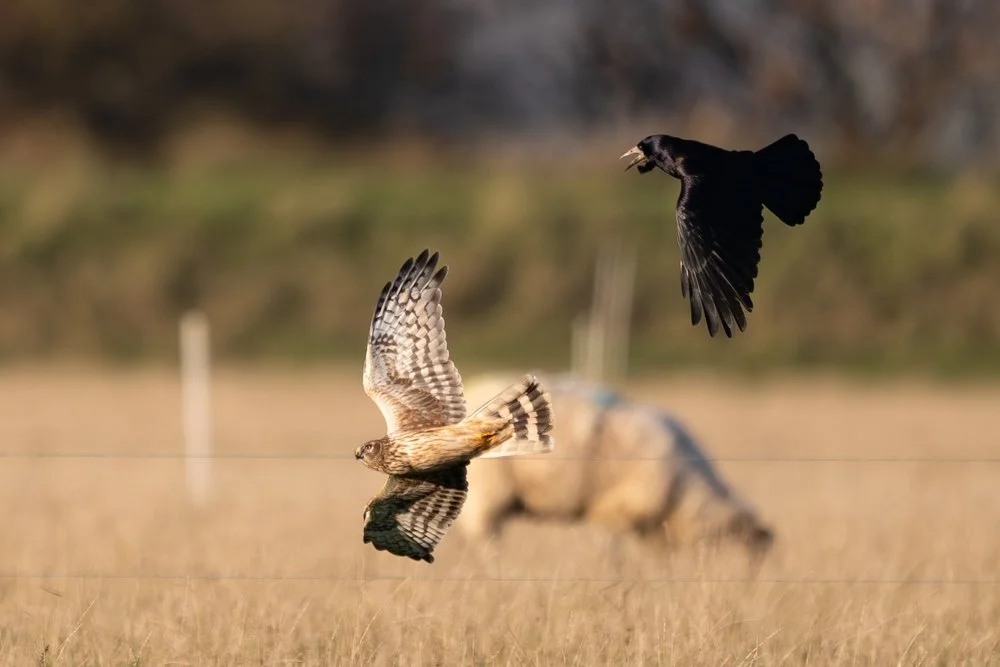
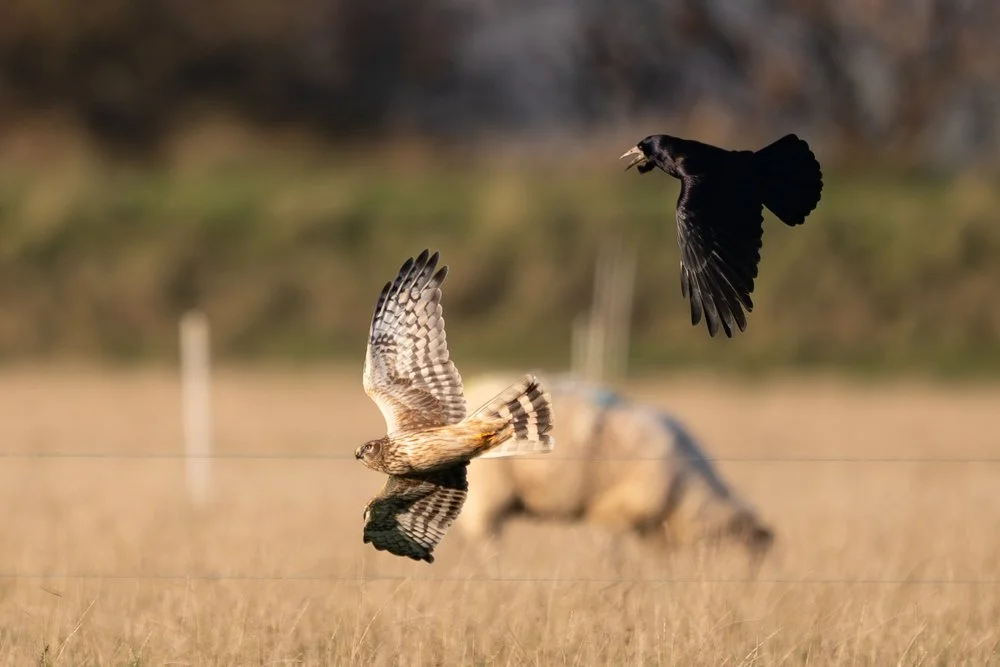
As the season progresses, there's been a noticeable reduction in aggressive interactions between hen harriers and rooks. Initially, rooks would frequently mob the harriers, leading to precarious aerial displays filled with tension. Observing this change could indicate the harriers' growing dominance in the area or a shift in the rooks' nesting behaviors. Such dynamics highlight the constant push and pull in avian territories, which offers a rich narrative for wildlife photographers.
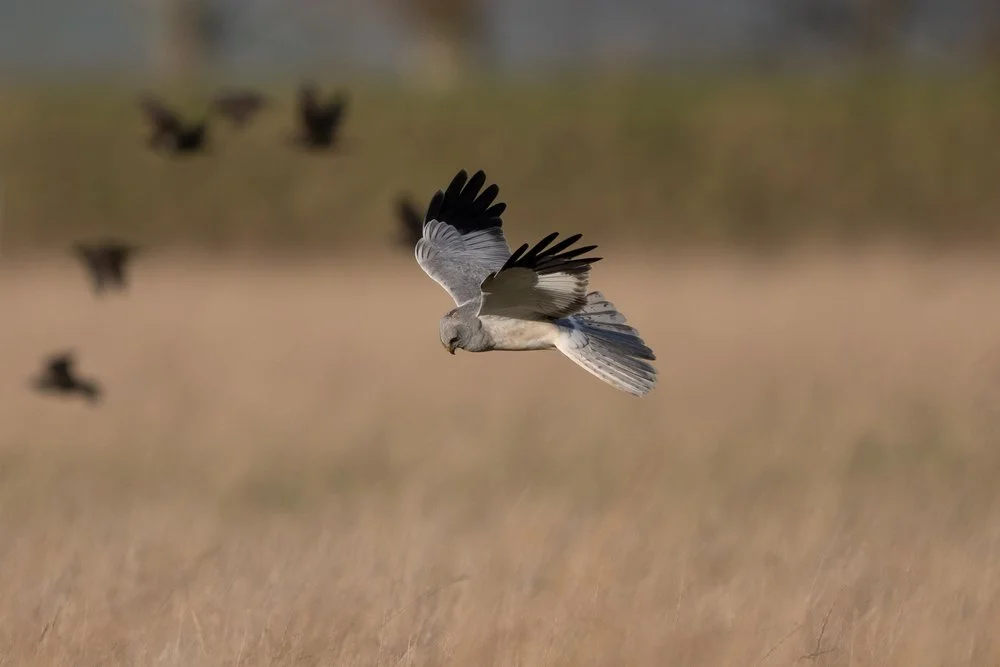
Aerial Encounters: A Close Call
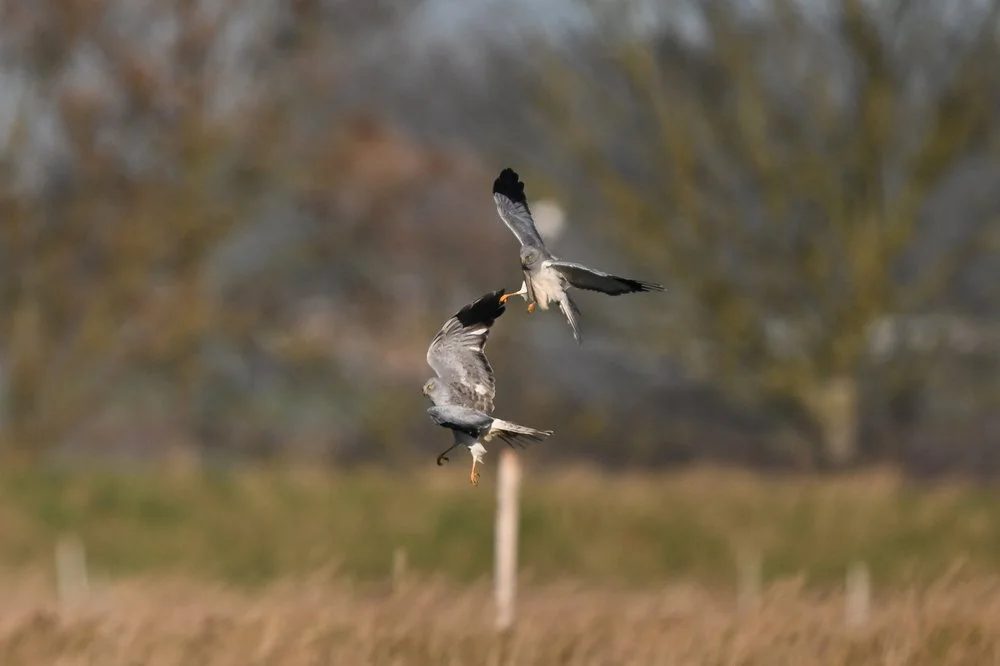
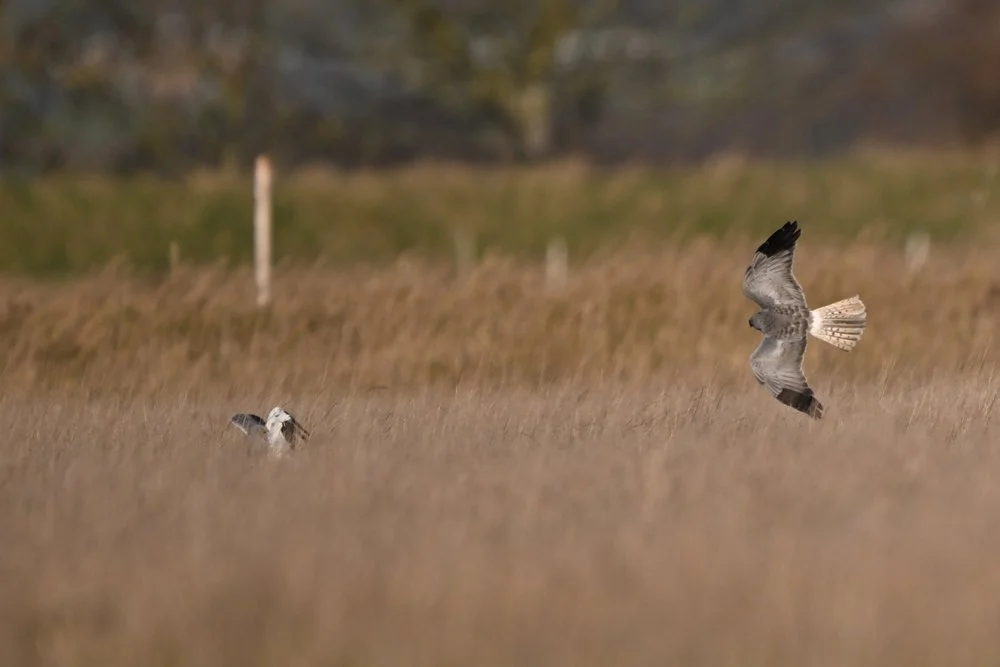
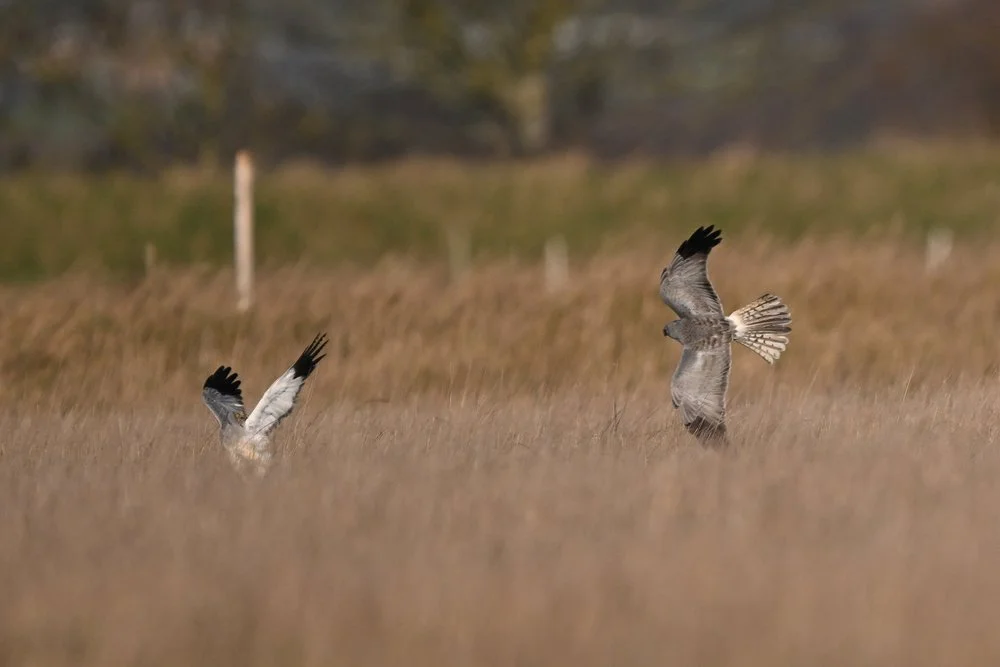
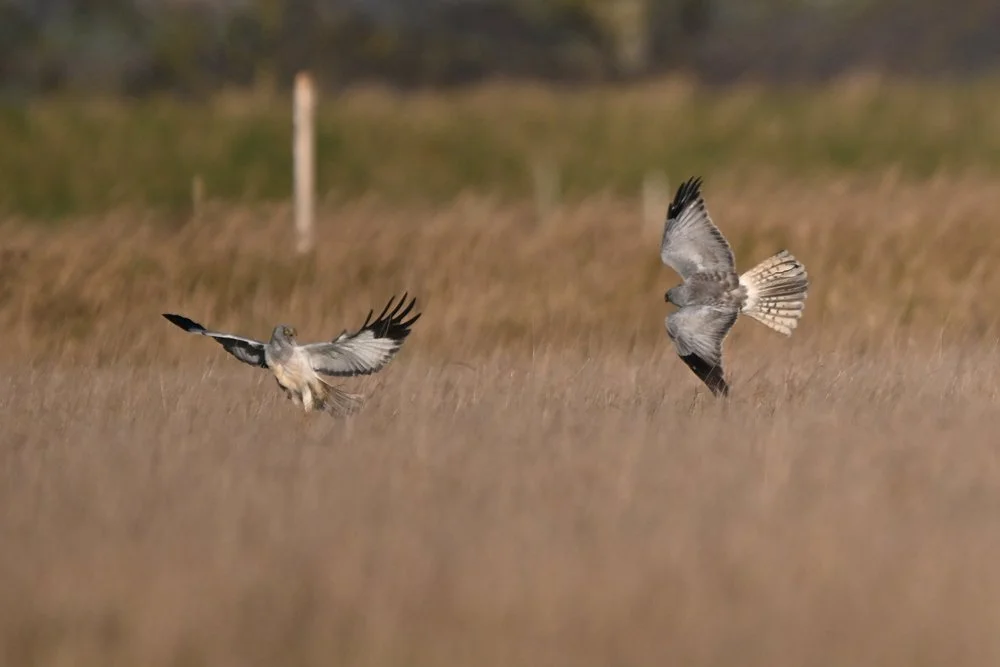
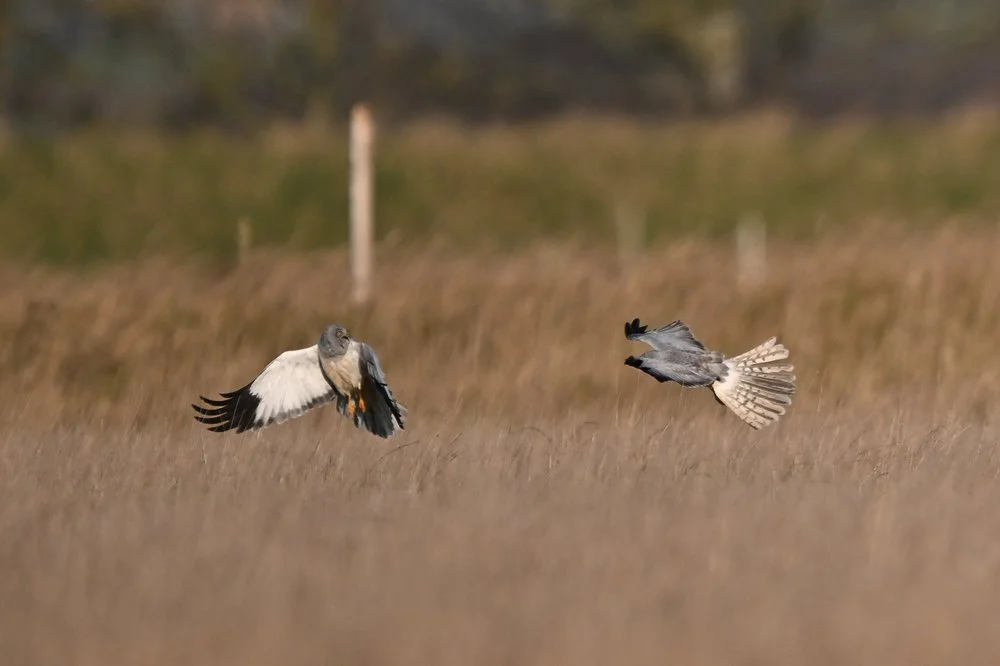
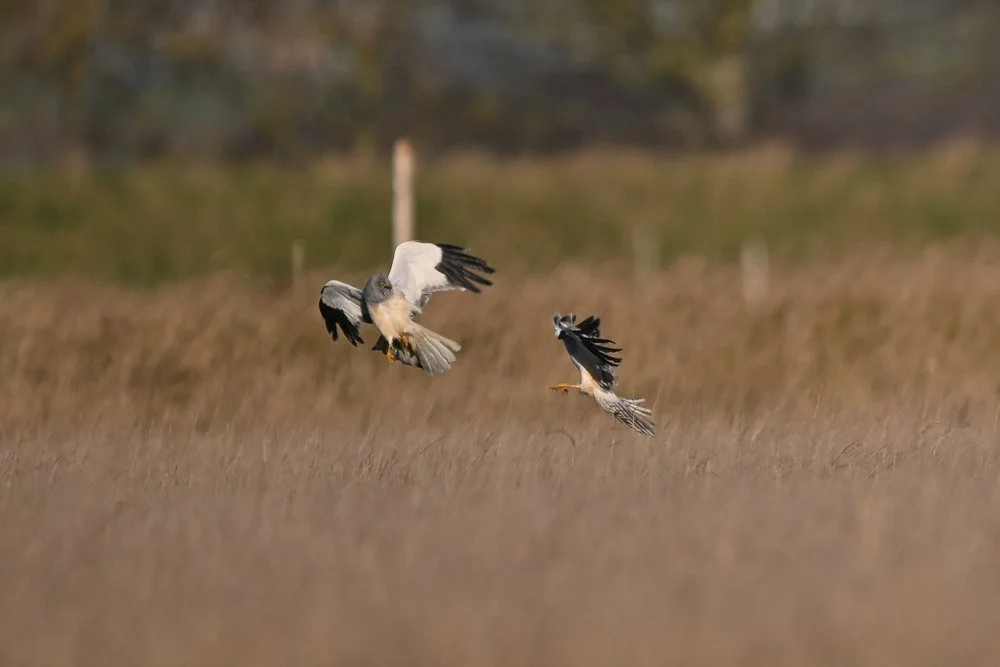
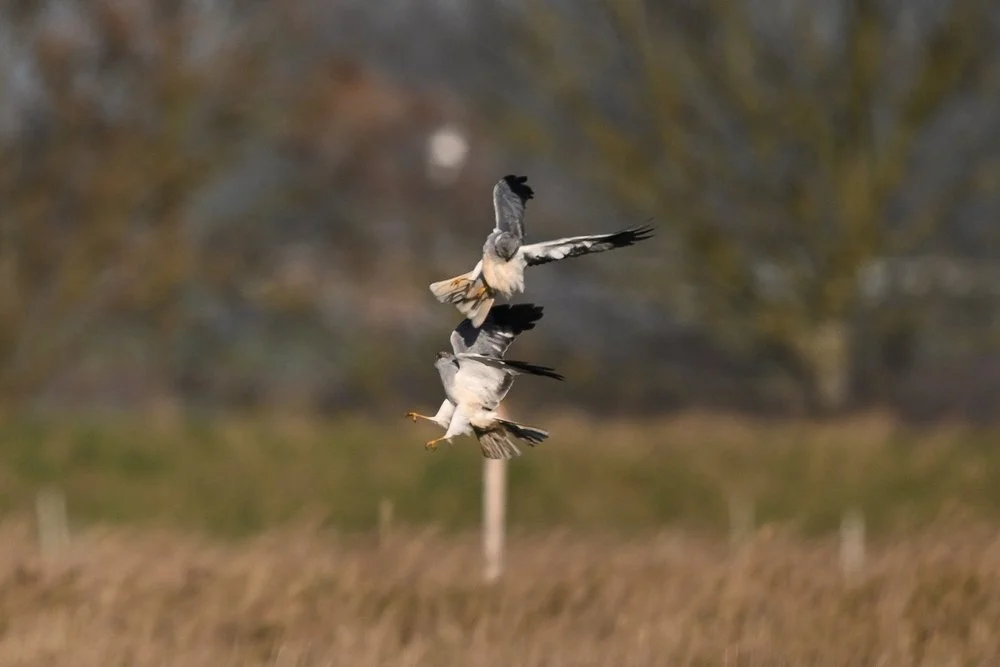
A particularly captivating incident involved a pair of hen harrier males. One male, positioned on the ground, caught the attention of another that was flying overhead. The second male swooped down, seemingly aiming for a direct attack. At first glance, it appeared he successfully hit the stationary harrier. However, a detailed examination of the photographs revealed that they were merely millimeters apart—no contact was made, but the potential for injury from those formidable talons was evident. This episode underlines the rapid and often deceptive nature of avian interactions and provides a perfect opportunity for photographers to capture high-stakes moments.
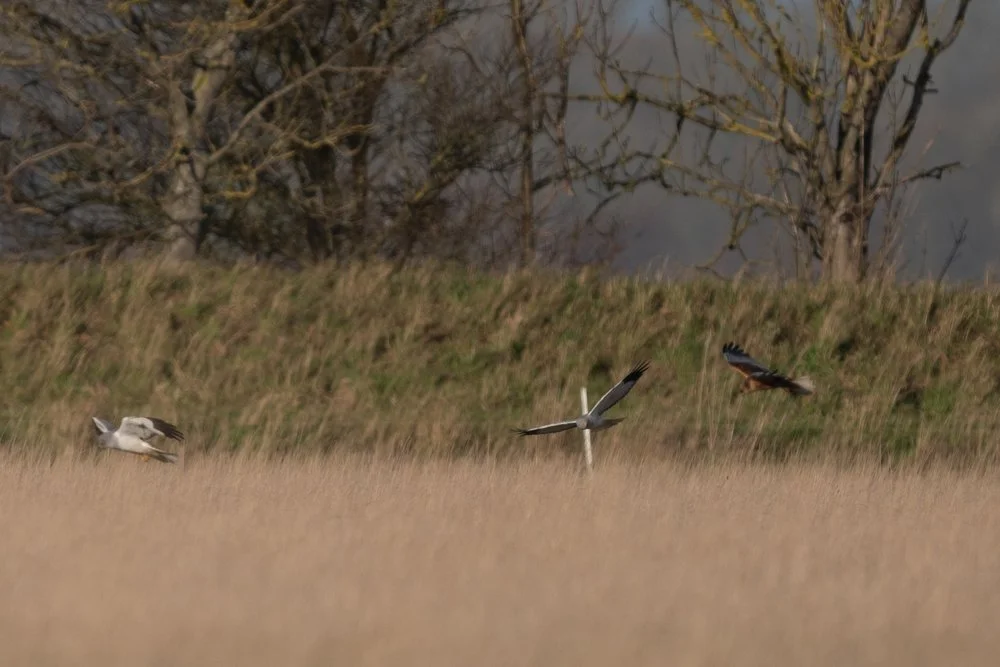
Photography Techniques for Capturing Action
When photographing aggressive interactions or dynamic scenes among birds, understanding the right settings can greatly improve the results. To capture fast-moving subjects like hen harriers in flight, consider using a fast shutter speed—at least 1/1000s or faster—to freeze the action. Continuous autofocus (AF-C in Nikon, AI Servo in Canon) is crucial for tracking moving subjects, while a larger aperture can help isolate the birds from their backgrounds.
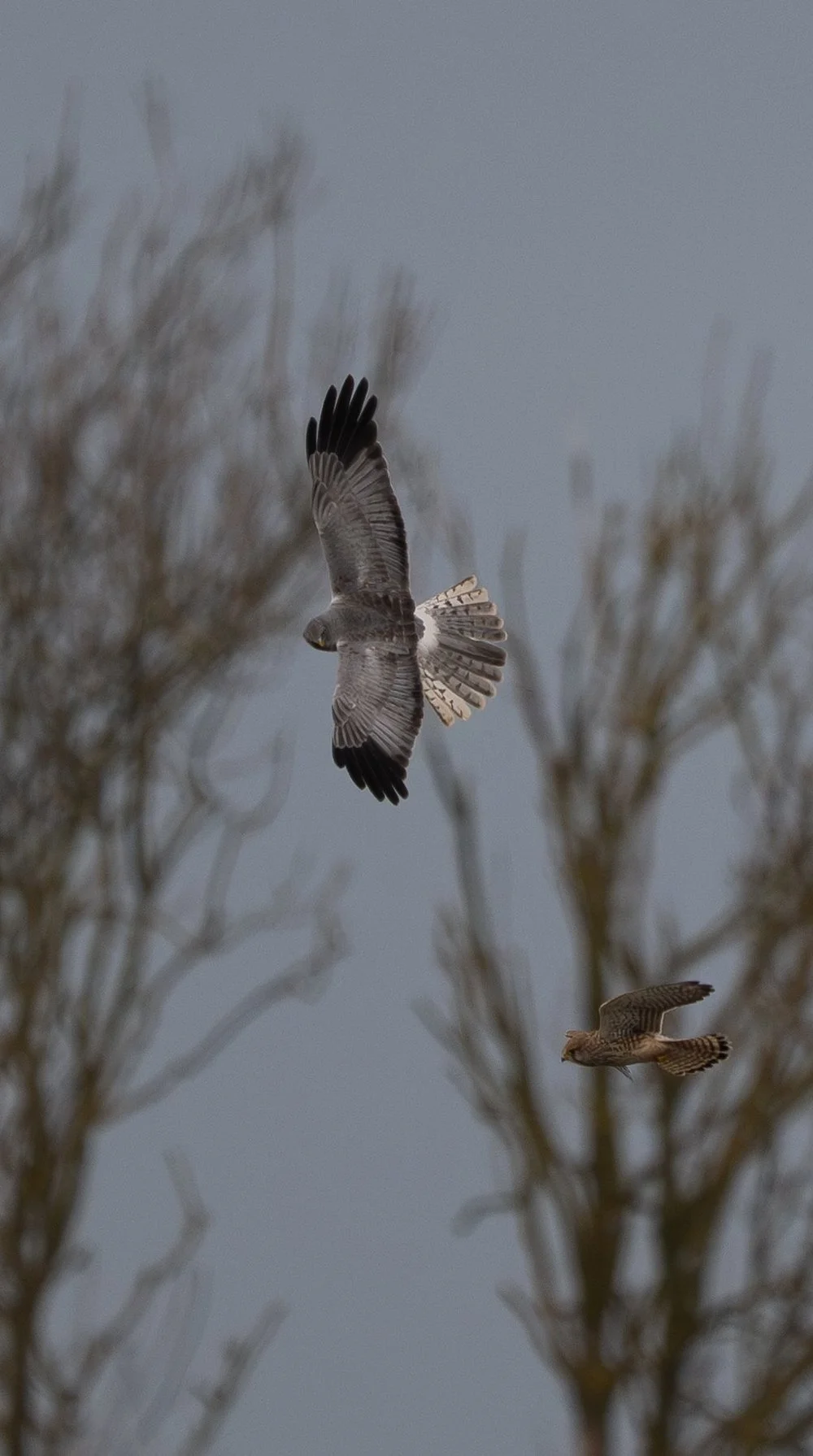
Although many of the photographs featured are heavily cropped due to the long distances involved in capturing these moments, they effectively convey the essence of the interactions. Long-range photography often requires additional post-processing to enhance details. Techniques such as sharpness and contrast adjustments can help clarify the subjects and make the images more impactful.
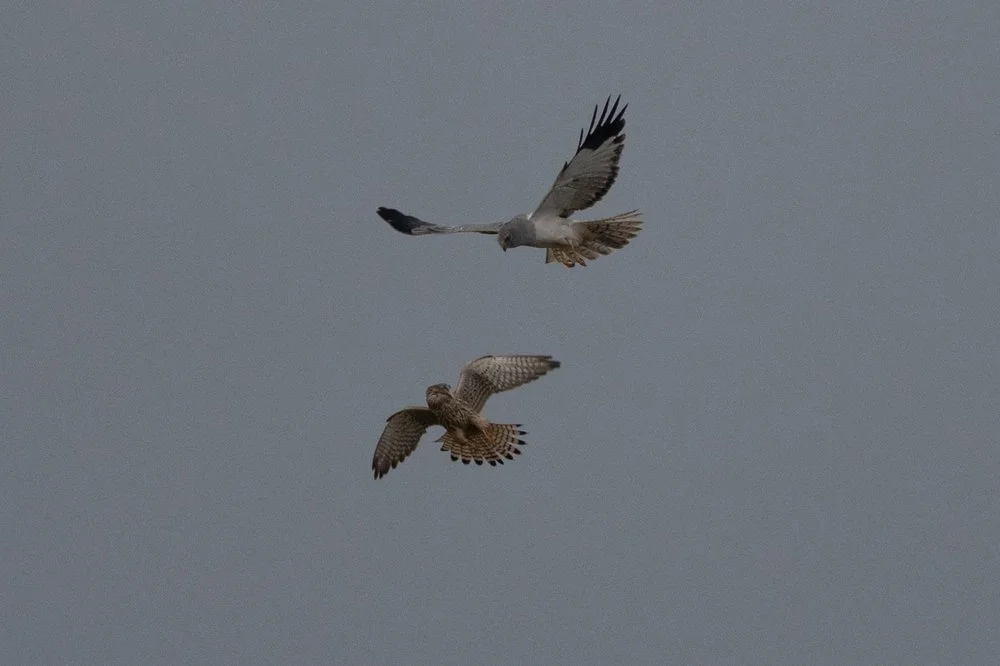
Variety of Interactions: Hen Harriers and Other Birds
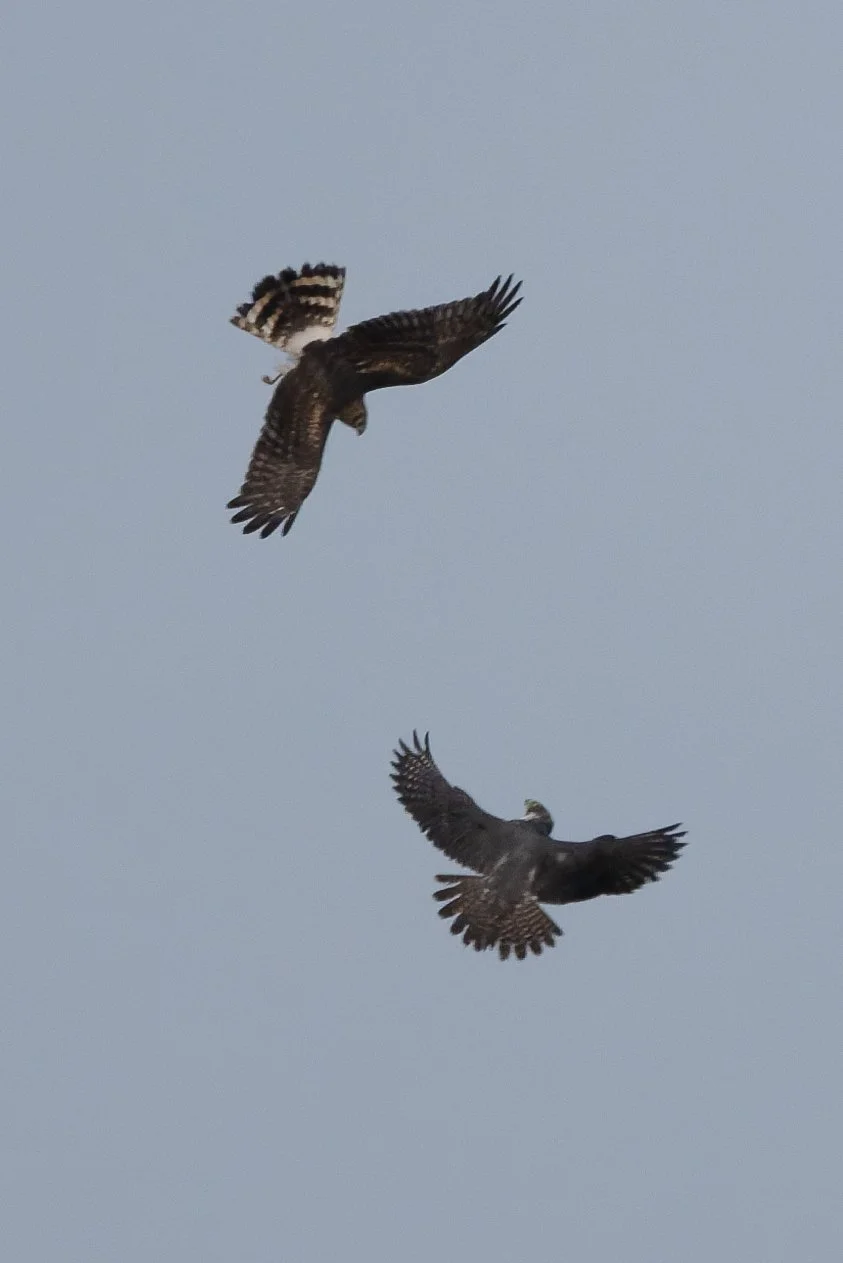
The hen harrier's interactions extend beyond its species, frequently engaging with a variety of other birds such as peregrine falcons, starlings, curlews, and kestrels. Each encounter tells a different story, be it a chase, a skirmish, or a mere stare-down. For instance, the intense dynamic between hen harriers and peregrine falcons—a species known for its speed—unfolds in dramatic aerial pursuits above the wetlands. Photographers who can identify these moments of tension stand to create compelling narratives in their captures.
Notable Observations and Photo Highlights
The following images showcase these interactions and the subtle details of life among birds in this region:
Hen Harrier & Rook
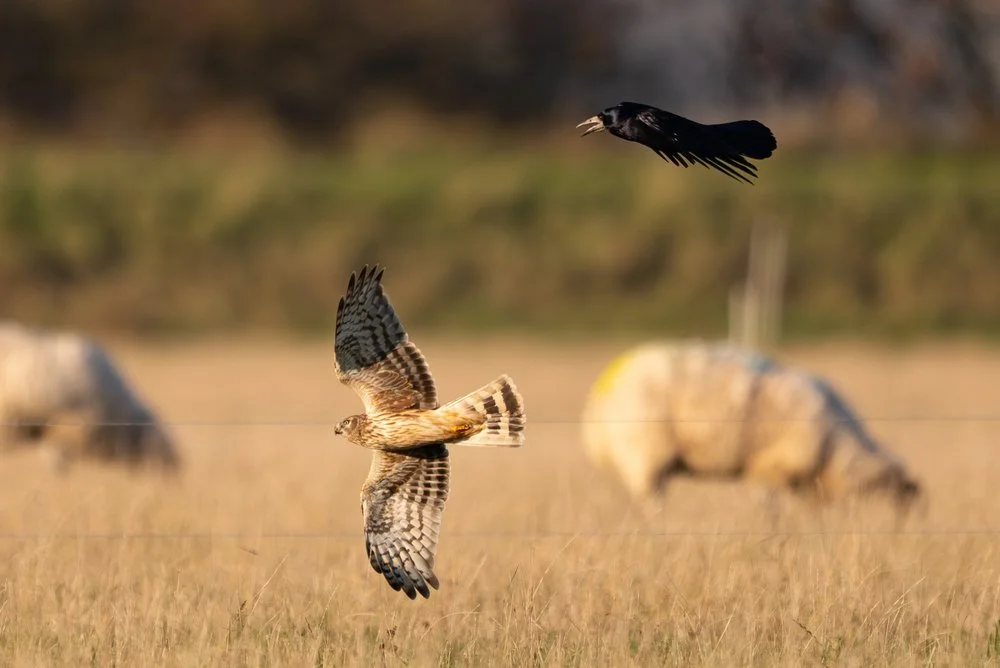
Hen Harrier & Rook
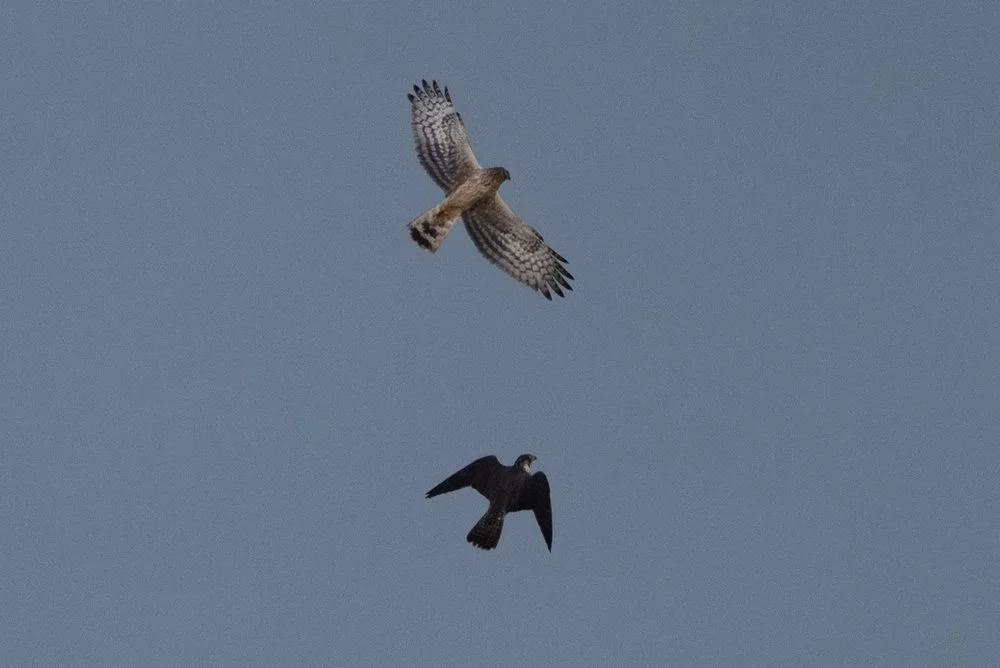
Hen Harrier & Peregrine Falcon
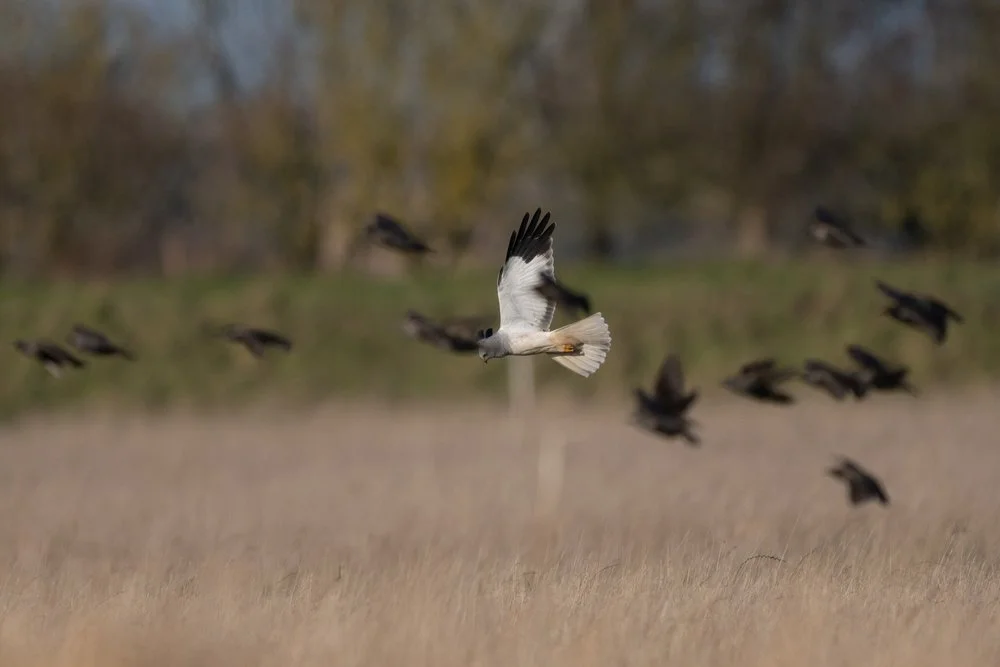
Hen Harrier & Starling
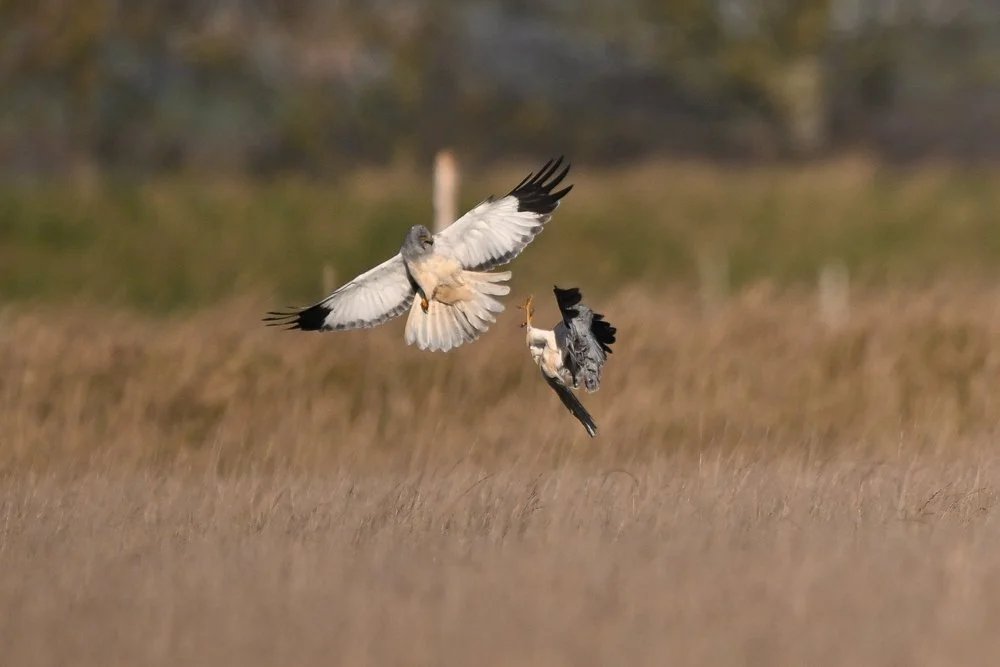
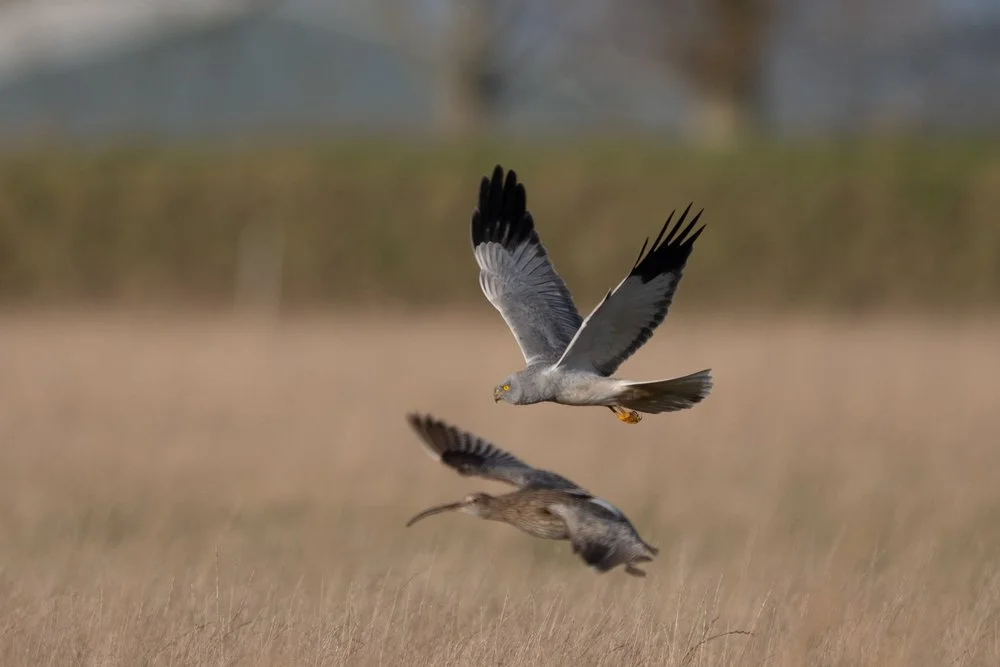
Hen Harrier & Curlew
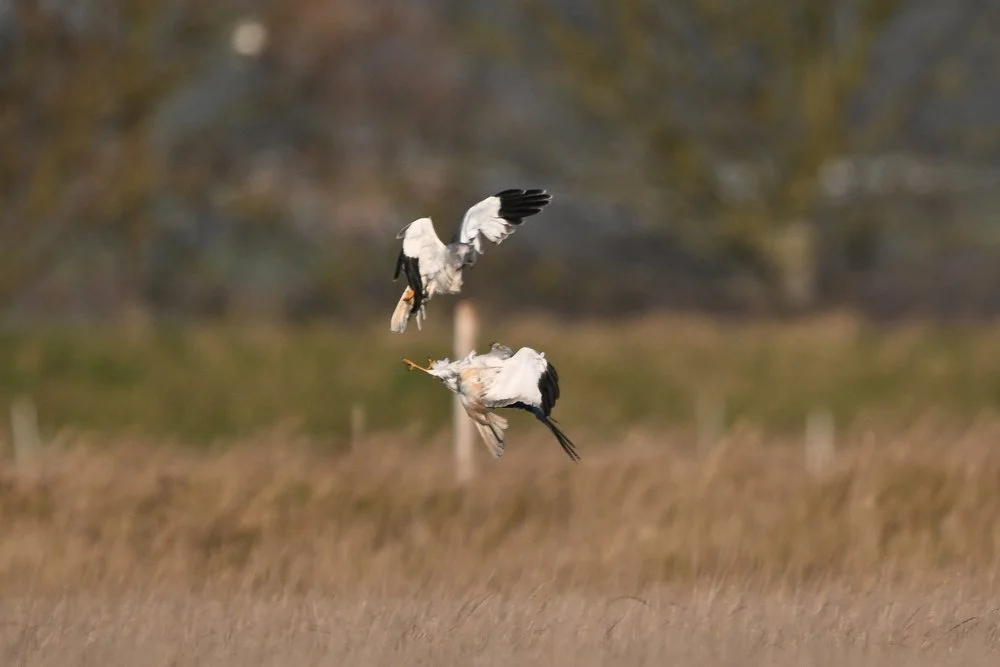
These images not only document the wildlife interactions but also reflect the photographer's journey and patience in observing these moments unfold. Through careful attention to detail, framing, and lighting, photographers can elevate the storytelling aspect of their wildlife imagery.
Conclusion
Monitoring hen harriers and their intricate interactions provides valuable insights into their behavior, social dynamics, and hunting strategies. For photographers in the field, these moments are not just opportunities to capture images but a chance to contribute to the understanding of wildlife ecology. As the seasons change, continued observation will undoubtedly yield more stories and breathtaking encounters, further enriching our appreciation for these magnificent birds.